Short answer
Hollow or bulging stucco has debonded: it is no longer stuck to the wall behind it. The most common cause is water getting behind the finish through a crack, an open joint or a failed detail, then freeze–thaw working it loose. Poor bonding when the stucco went on, corroded lath and, on EIFS, insulation board coming away from its adhesive are the others. A bulge can also mean the sheathing behind has swollen or rotted. It matters because a debonded section can crack open, let far more water in, and on a tall wall eventually fall. Gluing or screwing the bulge back treats the symptom. A lasting fix is to sound out the whole area, cut back to material that is still bonded, check and repair what is behind it, then rebuild with a mesh-reinforced base coat and finish.
What "hollow" actually means
Stucco and EIFS only work when the finish is bonded to the wall behind it. Traditional stucco is keyed into lath or bonded to masonry. EIFS is adhered, and often fastened, to the insulation board and the sheathing behind it. When that bond fails over an area, the finish becomes a loose skin. Tap it and it sounds dull and drummy instead of solid. Once enough of it has let go, it starts to bulge, sag or crack around the edges.
The knuckle test, done properly
Tap along the wall every foot or so with a knuckle or the handle of a screwdriver, working outward from the bulge in every direction until the sound turns solid again. Chalk or tape the edge of the hollow area as you go. The hollow area is almost always bigger than the visible bulge, and its outline is what decides how much has to come off. On EIFS, also press gently with a flat hand: a spot that gives or feels spongy is a concern on its own.
Small and local
- A hollow patch around an old impact, with dry, solid material all round it
- A single failed patch where an earlier repair never bonded
- No staining, no soft spots, no interior signs on that wall
Treat it as a water problem
- A bulge below a window, a sill, a roof line or a deck
- Hollow areas spreading from one season to the next
- Staining, efflorescence or dark damp patches around it
- A soft or spongy spot that gives when pressed
- Cracks forming a ring around the bulge
- Damp drywall, peeling paint or a musty smell inside on the same wall
What makes stucco let go
- Water behind the finish. By far the most common cause. Water gets in through a crack, a failed sealant joint, a window perimeter or a missing flashing, sits behind the finish, and every freeze–thaw cycle pushes the bond apart a little more.
- It never bonded properly. Stucco or a repair patch applied over dust, paint, a sealed surface or a wall that was too wet or too dry at the time can look fine for years before it lets go.
- The substrate has failed. Swollen or rotted sheathing, or rusted lath in traditional stucco, pushes the finish out or stops holding it. This is the case to worry about, because the damage is behind the part you can see.
- EIFS adhesive or fastening failure. On an insulated system, the board can come away from the wall it is adhered to, taking the finish with it.
- Impact and movement. A knock from a ladder, a vehicle or a hailstorm, or movement at a joint in the structure, can break the bond over a small area.
Why it should not be left
A debonded section does not stay the same. The edges crack, water gets in faster, the hollow area spreads, and the wall behind stays wet for longer after each rain. On a house that usually means sheathing and framing damage behind the finish, found later and at greater cost. On a two-storey wall, a parapet or a commercial building, a loose section of stucco over a walkway or an entrance is also a falling hazard, and should be made safe straight away.
Why gluing or pinning it back rarely lasts
There are products for re-adhering or mechanically pinning a loose section back to the wall, and in a narrow set of cases, a small dry area with a sound substrate, they have a place. On most bulges they are the wrong fix, for a simple reason: they re-attach the finish without answering why it let go. If water caused it, the water is still getting in, the substrate behind may already be damaged, and the repair is now hiding both. The same goes for caulking the crack around a bulge and painting over it.
What a proper repair looks like
01Sound out the whole area
Tap the elevation and mark the hollow outline. The repair goes to the edge of the hollow area, not the edge of the bulge.
02Cut back to bonded material
Remove the loose finish back to where it is genuinely stuck to the wall, with clean, square edges for the new material to key into.
03Check and repair what is behind
Look at the sheathing, lath or insulation board. Anything wet, soft, rotted or rusted is dried out, cut out and replaced before anything goes back on.
04Fix the way the water got in
The crack, sealant joint, window perimeter or flashing that let water in gets repaired at the same time. Otherwise the new section fails the same way.
05Rebuild with mesh, then finish and blend
A base coat with fibreglass mesh embedded and lapped onto the sound material around it, then a finish coat matched and carried to a natural break in the wall.
Where FAIME fits
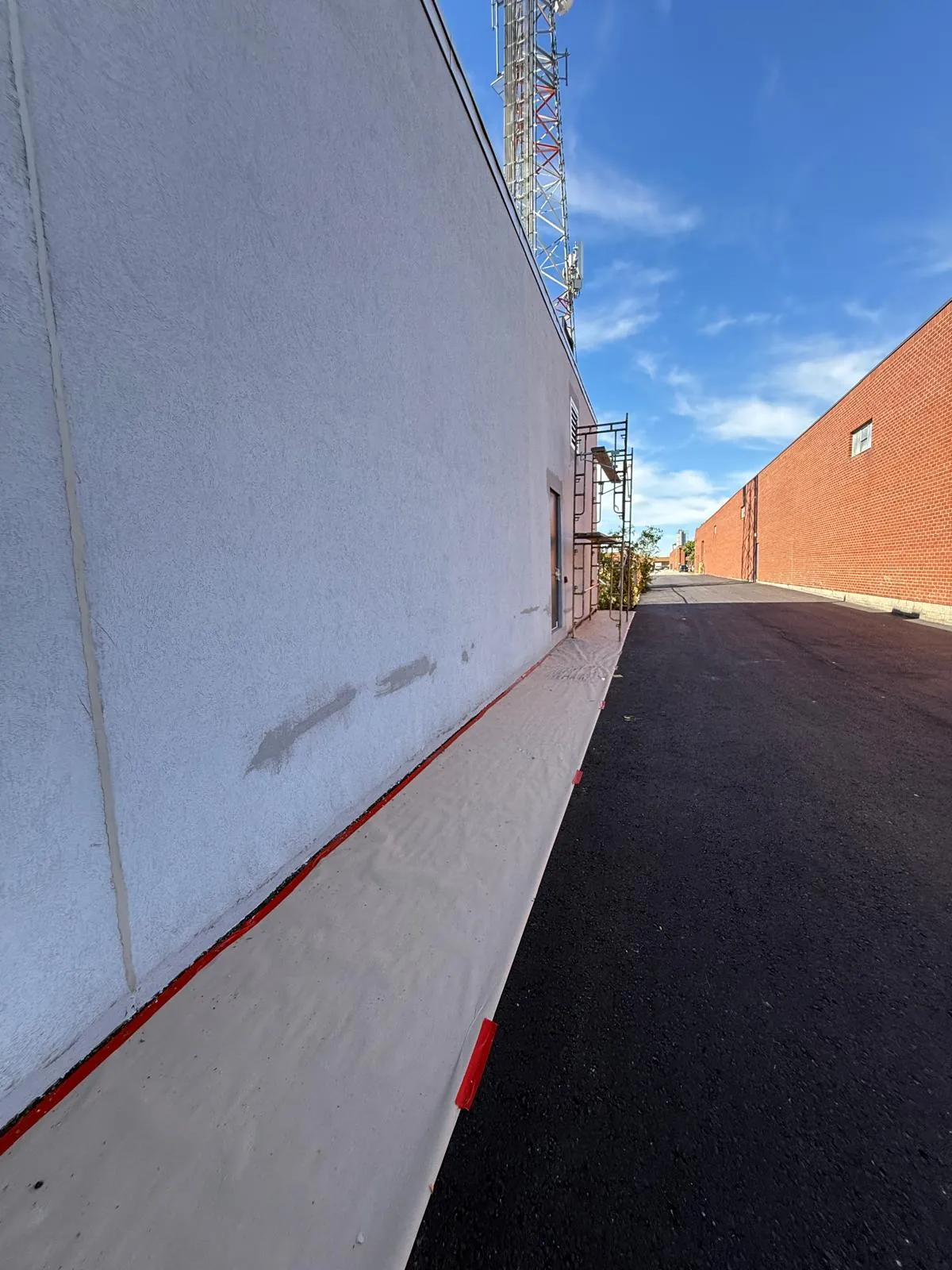
Stucco and EIFS repair is a self-performed FAIME scope across Toronto, North York, Scarborough, Vaughan, Richmond Hill, Markham, Mississauga, Brampton and the wider GTA. Our Scarborough stucco project shows failed material ground back to a sound surface before a meshed base coat, and on our Vaughan commercial envelope project all of the damaged stucco was cut back and repaired before any finish or paint went on. Where the wall behind has already gone, our Innisfil EIFS transformation shows the rot cut out and the structure rebuilt first.
- $2M general liability · Active WSIB (Class G5) · 2-year workmanship warranty
- Durabond and Sto systems for stucco, EIFS and parging
- Written scope before work starts, including how far the repair goes and what happens to the substrate
We do not quote a bulge from a photograph, because the size of the hollow area and the condition behind it cannot be seen in one. The site visit is free.