Short answer
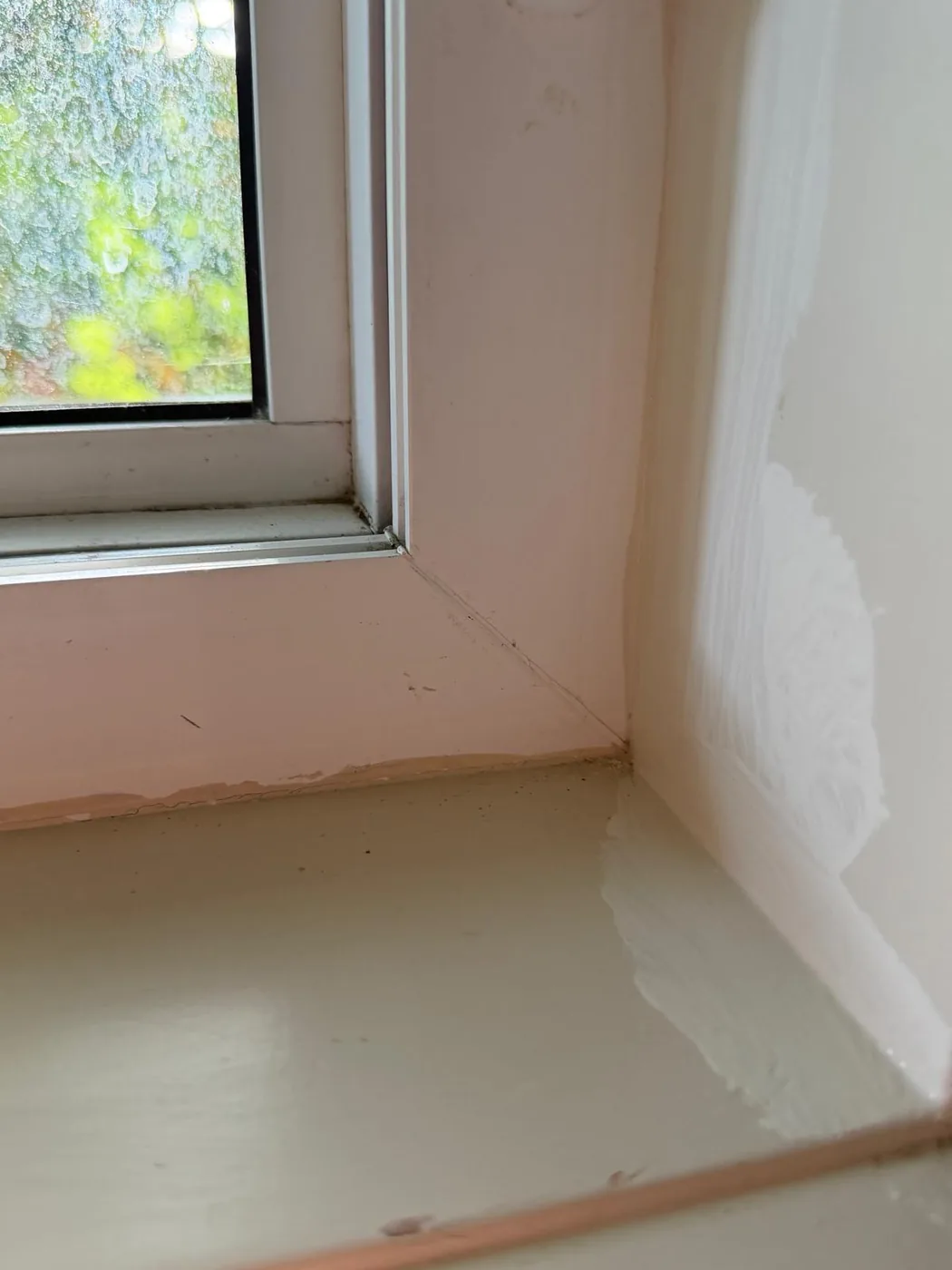
First decide whether it is a leak or condensation, because the timing gives it away. Condensation shows up in cold weather, with fogged or wet glass on the inside, water pooling on the inside sill, and it has nothing to do with rain. A leak shows up after rain, especially wind-driven rain on one side of the building, and often stains the wall below the window rather than the sill. Leaks usually come in around the window, not through it: failed perimeter caulking, a sill with no proper flashing or drainage, or water entering above the window (a head flashing, a crack in the wall, a roof or gutter) and running down inside the wall to show up at the window. A leak has to be traced to its entry point before anything is sealed. Condensation is fixed by lowering indoor humidity and improving air movement, not by caulking.
Leak or condensation: read the timing
Condensation
- Winter, on the coldest days
- Fogged, wet or frosted glass on the inside
- Water on the inside sill and the bottom of the frame
- Worst in bedrooms, bathrooms and kitchens, often first thing in the morning
- No link to rain at all
A leak
- Appears during or after rain, especially wind-driven rain
- On one side of the building, the side the weather hits
- Stains on the wall below the window, or at the corners of the frame
- Bubbling paint, soft drywall or swollen trim below the sill
- Can appear in any season
Keep a note for a few weeks: the date, the weather, which window, and what you saw. It is the most useful thing you can hand a contractor, and it often settles the question on its own.
If it is condensation
Condensation forms when warm, moist indoor air meets a surface colder than its dew point, and in winter the glass is the coldest thing in the room. It is not a building-envelope failure, and caulking the outside of the window will not change it. What helps is lowering indoor humidity (bathroom and kitchen fans that vent outside and actually get used, not drying laundry indoors, a humidifier set lower), keeping air moving across the glass (open blinds and curtains, clear heating vents below windows), and, where the glass or frame is failing, better-performing windows. Fogging between the panes of a sealed unit is a different thing again: the unit's seal has failed and the glass unit needs replacing.
If it is a leak: where the water actually gets in
A window leak very often has nothing to do with the glass. The usual entry points are:
- The perimeter joint between the frame and the wall. Caulking that has cracked, shrunk or pulled away lets rain straight into the rough opening.
- The sill. Water collects at the bottom of every opening. A sill with no slope, no flashing, a blocked drainage path, or a failed sill joint lets it in.
- Above the window. A missing or failed head flashing, a crack in the stucco or brick above, an open joint in the cladding, or a roof or gutter problem higher up. Water gets into the wall above and runs down inside it until the window frame stops it, so the stain shows up at the window even though the window is not the cause.
- The window unit itself. Failed corner seals in the frame, worn glazing seals, or blocked weep slots in the frame.
Why sealing everything shut is the wrong first move
Caulking every joint you can see around a leaking window can seal the water in: many windows and walls are designed to let water that gets behind them drain back out at the bottom, and sealing that path makes things worse. It also hides the evidence of where the water was actually coming in. Trace first, seal second.
How a leak is traced properly
01Look above as well as around
Check the wall, flashings, gutters and roof line above the window, not just the window itself. Water travels.
02Water-test from the bottom up
With someone watching inside, run a hose on one area at a time, starting low at the sill and working upward: sill, then each side, then the head, then the wall above. The area that makes the leak appear is where it gets in.
03Open up where the evidence points
Remove the failed caulking or cladding at the entry point and look at what is behind. Wet, soft or stained material shows how far the water has travelled.
04Fix the detail, then test again
Repair the flashing, sill or perimeter joint that failed, dry out and replace damaged material, and hose-test again before the wall is closed and finished.
What to do about the stain inside
Wait until the leak is fixed and the wall has dried out before repairing the drywall and repainting. A stain painted over while the wall is still wet comes straight back through. Stained drywall usually needs a stain-blocking primer before the finish coat. Drywall that is soft, crumbling or smells musty should be cut out and replaced, not painted.
Where FAIME fits
Window perimeter caulking, sealant joints, flashing details and the stucco and brick around openings are self-performed FAIME scopes across Toronto, North York, Scarborough, Vaughan, Richmond Hill, Markham, Mississauga, Brampton and the wider GTA, as is the interior drywall and paint repair afterwards.
On our Willowdale project, daylight was visible through the roof at one spot, but once the shingles came off the water track ran well past it. The leak was traced to its real source and hose-tested before the access came down, and all 12 upstairs windows were repaired, caulked and repainted. On our Vaughan commercial project, every window caulking line on the building was cut out and redone.
- $2M general liability · Active WSIB (Class G5) · 2-year workmanship warranty
- Leaks traced to the entry point before anything is sealed