Short answer
Rust stains come from iron or steel rusting either on the wall or inside it, and the start of the streak tells you which. A streak that starts under a light fixture, bracket, railing, gutter hanger, fastener or anything metal attached to the wall is surface rust dripping down. Deal with the metal (remove, replace or treat and paint it), then clean the stain. A stain that comes out of the wall itself is different: rust spots or lines bleeding through stucco, often along corners, edges or around windows, point to corroding metal accessories, lath or fasteners inside the finish. Rust staining at the top of a window or door opening in brick can mean a rusting steel lintel. Metal rusting inside a wall expands and cracks the material around it, so those need repair, not just cleaning. Iron-rich sprinkler water can also leave orange stains low on a wall.
Follow the streak upward
A rust stain always starts at a piece of iron or steel that is wet. Stand back, find the top of the streak, and look at what is there.
Coming from something on the wall
- Under a light fixture, sign bracket, hose bib or satellite mount
- Below a steel railing, stair or balcony where it meets the wall
- Below gutter hangers, flashing or roof metals
- Small dots at exposed nails or screws
- Low, fan-shaped stains where a sprinkler hits the wall
Coming out of the wall itself
- Rust lines along outside corners or the edges of stucco panels
- Rust bleeding at the bottom edge of stucco just above grade
- Rust spots in a grid or regular pattern across a stucco wall
- Rust at the top corners of windows and doors in brick
- Rust together with cracking or bulging around it
When the rust is inside the wall
Stucco and masonry walls contain steel that is meant to stay dry: the metal accessories that form corners and edges in stucco, the lath traditional stucco is keyed into, the fasteners holding it, and the steel lintels that carry brick over window and door openings. When water reaches them, through a crack, a failed sealant joint, a missing flashing or a finish too close to the ground, they rust.
That matters more than the stain. Rusting steel expands as it corrodes, and inside a wall that expansion pushes on the material around it. Stucco cracks and lets go along a rusting corner. Brick cracks and shifts above a rusting lintel. Traditional stucco can lose its grip when the lath behind it corrodes. And every one of those cracks lets in more water, which speeds the rust up.
Signs to take seriously
Rust stains together with cracking along the same line, stucco that sounds hollow or bulges around the stain, brick above a window that has cracked in a stepped pattern or pushed out, or a window or door below it that has started to stick. Those point to corrosion that is damaging the wall, not just marking it.
Cleaning the stain
Cleaning only makes sense once the source is dealt with, or the stain comes straight back.
- Use a rust stain remover made for the surface. Masonry, stucco and painted surfaces each need different products.
- Test on a small, hidden area first. Many rust removers are acidic and can etch stucco and brick, lighten or darken the surface, or damage paint.
- Follow the label, then rinse thoroughly and protect plants and nearby surfaces.
- On painted walls, a stain-blocking primer may be needed before repainting, or the stain bleeds through the new paint.
Fixing the source
01Surface metal
Remove what is no longer used. Replace rusted fasteners with corrosion-resistant ones. Clean, prime and paint steel railings, stairs, doors and roof metals properly. Seal around anything penetrating the wall.
02Metal inside stucco
Cut back the stucco around rusting accessories or fasteners, replace them, deal with how the water got to them, and rebuild with a mesh-reinforced base coat and finish.
03Rusting lintels in brick
Lintel repair or replacement involves the masonry above and is a structural question. Get it assessed properly, and if the brickwork has moved, involve a qualified professional before anyone works on it.
04Stop the water
Flashings, sealant joints, window perimeters, clearance at grade and sprinkler aim. Whatever put water on the steel.
Where FAIME fits
Stucco repair, removal of old fixtures and penetrations, sealant and caulking work, and painting exterior metals are self-performed FAIME scopes across Toronto, North York, Scarborough, Vaughan, Richmond Hill, Markham, Mississauga, Brampton and the wider GTA.
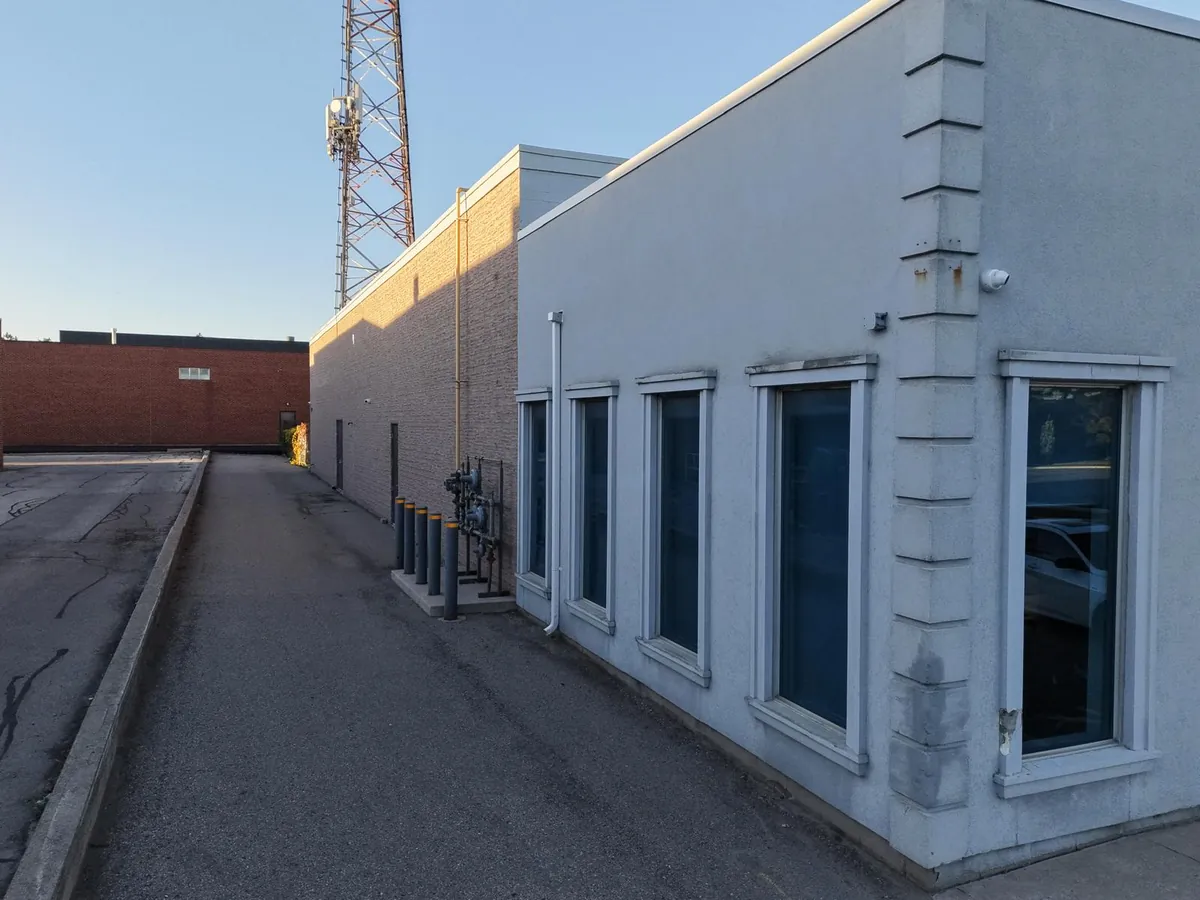
On our Vaughan commercial project, the old hose bib, redundant wiring and an old light fixture were taken off the walls and the openings patched, the rusted dock-door edges, roof metals, railings and metal stairs were painted, and the stained corner quoins were replaced with new Canamould stock, before two full coats went on the whole building.
- $2M general liability · Active WSIB (Class G5) · 2-year workmanship warranty
- Written scope before work starts, naming the source of each stain