Short answer
Paint on exterior metal usually fails for one of four reasons: rust that was painted over, galvanized steel painted with the wrong primer, a surface that was not cleaned or roughened, or thin coats on edges and welds. Rust left under paint keeps growing and lifts the paint from underneath, often starting at a scratch or a joint and creeping outward. Galvanized steel is smooth and zinc-coated, and some ordinary paints and primers do not bond to it and peel off in sheets. Old glossy paint that was not scuffed, and dirt, grease or chalk left on the surface, give new paint nothing to grip. Edges, corners and welds hold the thinnest paint and rust first. A lasting repaint means removing loose paint and rust, cleaning and degreasing, a primer made for that metal (rust-inhibiting on steel, compatible with zinc on galvanized), and two finish coats rated for exterior metal, with extra attention on edges and welds.
Read how the paint is failing
Rust under the paint
- Bubbles or blisters with rust inside
- Rust spreading out from a scratch, chip or joint
- Rust bleeding at welds, bolt heads and the bottom of posts
- Orange streaks running down onto the wall or paving below
Paint letting go
- Sheets peeling off with bright, clean metal underneath: often galvanized steel with the wrong primer
- Flakes lifting off an older glossy coat: the old paint was not scuffed
- Peeling where hands and feet wear on railings and treads
Why paint fails on metal
- Rust was painted over. Paint does not stop rust that is already there. Moisture reaches it through the thinnest spots, and the rust keeps growing underneath and lifting the paint. This is called rust creep, and it spreads outward from every chip and scratch.
- Galvanized steel, wrong primer. Many railings, stairs, posts and door frames are galvanized. New galvanizing is very smooth, and some paints and primers, especially some traditional oil-based types, do not bond well to zinc and can peel off in sheets. Galvanized steel needs cleaning, sometimes light roughening, and a primer made for it.
- No surface prep. Dirt, grease, chalky old paint, loose rust, and glossy paint that was not sanded all stop new paint from gripping.
- Thin paint on edges, corners and welds. Paint pulls away from sharp edges as it dries, leaving the thinnest film where the metal is most exposed. Rust starts there.
- Wrong conditions. Metal gets colder and holds dew longer than the air around it. Painting cold, damp or dewy metal traps moisture under the film. Painting in direct sun on hot metal can make paint skin over too fast.
How to repaint metal so it lasts
01Remove loose paint and rust
Scrape, wire-brush and sand back all loose paint and rust. Sound paint can stay if it is scuffed. Heavily rusted or pitted areas take more work, and badly corroded metal may need repair or replacement before painting.
02Clean and degrease
Wash off dirt, grease, chalk and sanding dust, and let the metal dry completely.
03Prime bare metal the same day
A rust-inhibiting primer on bare steel, or a primer made for galvanized metal on zinc-coated steel. Bare steel starts to flash-rust quickly, so it should not be left unprimed.
04Stripe the edges
An extra brushed coat on edges, corners, welds and bolt heads, where the film is thinnest and rust starts first.
05Two finish coats for exterior metal
A finish made for exterior metal, applied in two full coats on dry metal in the right temperature range, out of direct sun where possible.
On a commercial building
Railings, stairs, entry doors, dock doors and roof metals are what visitors, tenants and delivery drivers see up close. On a repaint, they are also the details that make a new wall colour look finished. A freshly painted wall next to a rusty railing or a peeling dock-door frame still looks neglected. Metals should be scoped as part of the repaint, not left for later.
Where FAIME fits
Painting exterior metals is a self-performed FAIME scope across Toronto, North York, Scarborough, Vaughan, Richmond Hill, Markham, Mississauga, Brampton and the wider GTA, on houses, storefronts and large commercial buildings.
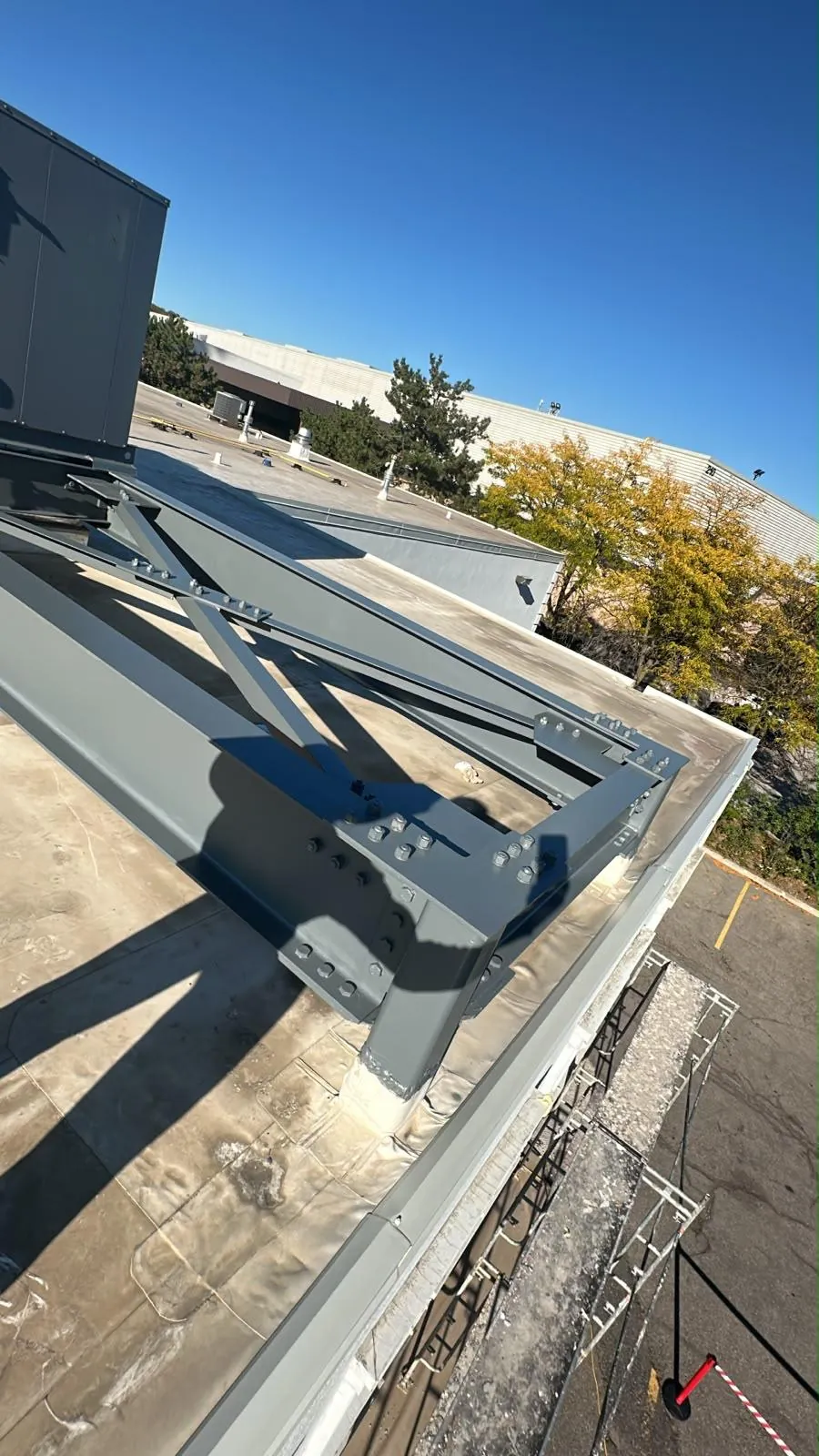
On our Vaughan commercial envelope project, the metal scope included the roof metals, entry plaza doors and railings, the metal stairs, painted completely black, and the dock doors and the rusted metal edges around them, all as part of the same job as the wall repairs and two-coat repaint, on an occupied building finished in 7–10 working days.
- $2M general liability · Active WSIB (Class G5) · 2-year workmanship warranty
- Sherwin-Williams, Benjamin Moore and Dulux coatings