 FAIME
Stucco or Exterior Painting in Winter? What Can Still Be Done, and What Should Wait
Once the nights drop below freezing, most outdoor stucco, EIFS and paint work in Toronto stops. That is not a contractor being cautious for the sake of it. Every one of these products cures by drying or by chemical reaction, and cold and frost stop that from happening properly.
Most stucco, EIFS finish coats and exterior paints should not be applied in a Toronto winter, because every product has a minimum temperature for the air and the wall surface, and it has to stay above that while the coating cures. Many acrylic stucco and EIFS finishes need roughly 4°C or more, held for at least a day after application. Some low-temperature exterior paints are rated down to about 2°C, but short days, frost and dew on the wall still get in the way. Cement-based coats must never freeze while they cure. In practice, full exterior jobs run from spring to late fall. In winter, small urgent repairs can be sealed temporarily, commercial work that cannot wait can be enclosed and heated, and interior work carries on as normal. A crack you find in November is worth sealing against water before the freeze-thaw cycles start.
The temperature rules behind it
The exact limits come from each manufacturer's product data sheet, and they apply to the wall surface as much as to the air. A north-facing wall at 9 a.m. can be several degrees colder than the forecast.
What goes wrong in the cold
- Acrylic finishes and paint do not form a proper film below their minimum: they stay soft, wash off, or cure patchy and chalky
- Cement-based base coats and stucco that freeze before they cure lose strength and can crumble or delaminate
- Frost and dew on the surface stop adhesion, even on a sunny afternoon
- Short days mean coats go on late and meet the evening frost while still wet
What a proper application needs
- Air and surface above the product's minimum, and staying there for the cure time
- A dry wall: no frost, no dew, no rain forecast before the coat has set
- The surface temperature checked on the day, not just the forecast
- The data sheet followed for every coat: primer, base coat, finish
Water that gets into a stucco crack in the fall freezes, expands and pushes the crack wider, then thaws and lets more water in. Toronto goes through that cycle many times every winter. A hairline crack in October can be an open crack with loose stucco around it by April. We explain how to read stucco cracks in why is my stucco cracking.
What can still be done in winter
- Temporary sealing of open cracks and failed joints: on a dry day above freezing, a compatible sealant keeps water out until spring. It is a stopgap, not the repair, and it is removed or cut back when the proper repair is done.
- Enclosed and heated work, when the schedule cannot wait: on commercial and new-build projects, the work area can be wrapped in tarps and heated so the wall stays above the product minimum through the cure. It adds real cost, so it only makes sense when a deadline demands it.
- Inspection, scope and quoting: cracks, bulging, staining and failed caulking are easy to see on a bare winter wall, and a written scope done now means the work is ready to start in the first warm weeks.
- All interior work: painting, drywall and tile go ahead all winter. See drywall cracks and nail pops in winter.
Found a crack in November? Do this
Check whether water can get in
Hairline surface cracks can usually wait for spring. Open cracks, cracks at window corners, gaps at flashings and failed caulking let water in and should be sealed before the freeze.
Tap around it
Knock gently on the stucco around the crack. A hollow sound means the finish has let go of the wall behind it. That area should be looked at soon, because freeze-thaw can push loose stucco off. See hollow or bulging stucco.
Seal it temporarily, on a dry day above freezing
A compatible exterior sealant over the open crack keeps water out for the winter. Do not smear cement patch over it in the cold: it will not cure and it will fall out.
Book the proper repair for spring
The real fix is to open the crack, reinforce it with mesh and restore the finish to match. That needs warm, dry weather, and the spring schedule fills up early.
Where FAIME fits
EIFS and stucco installation and repair, crack repair, caulking and exterior painting are self-performed FAIME scopes, for houses, multi-unit and commercial buildings across Toronto, North York, Scarborough, Etobicoke, Vaughan, Richmond Hill, Markham, Mississauga, Brampton and the wider GTA. Through the winter we still do site visits and written scopes for exterior work, so it can start as soon as the weather allows, and our crews keep working indoors on painting, drywall and tile.
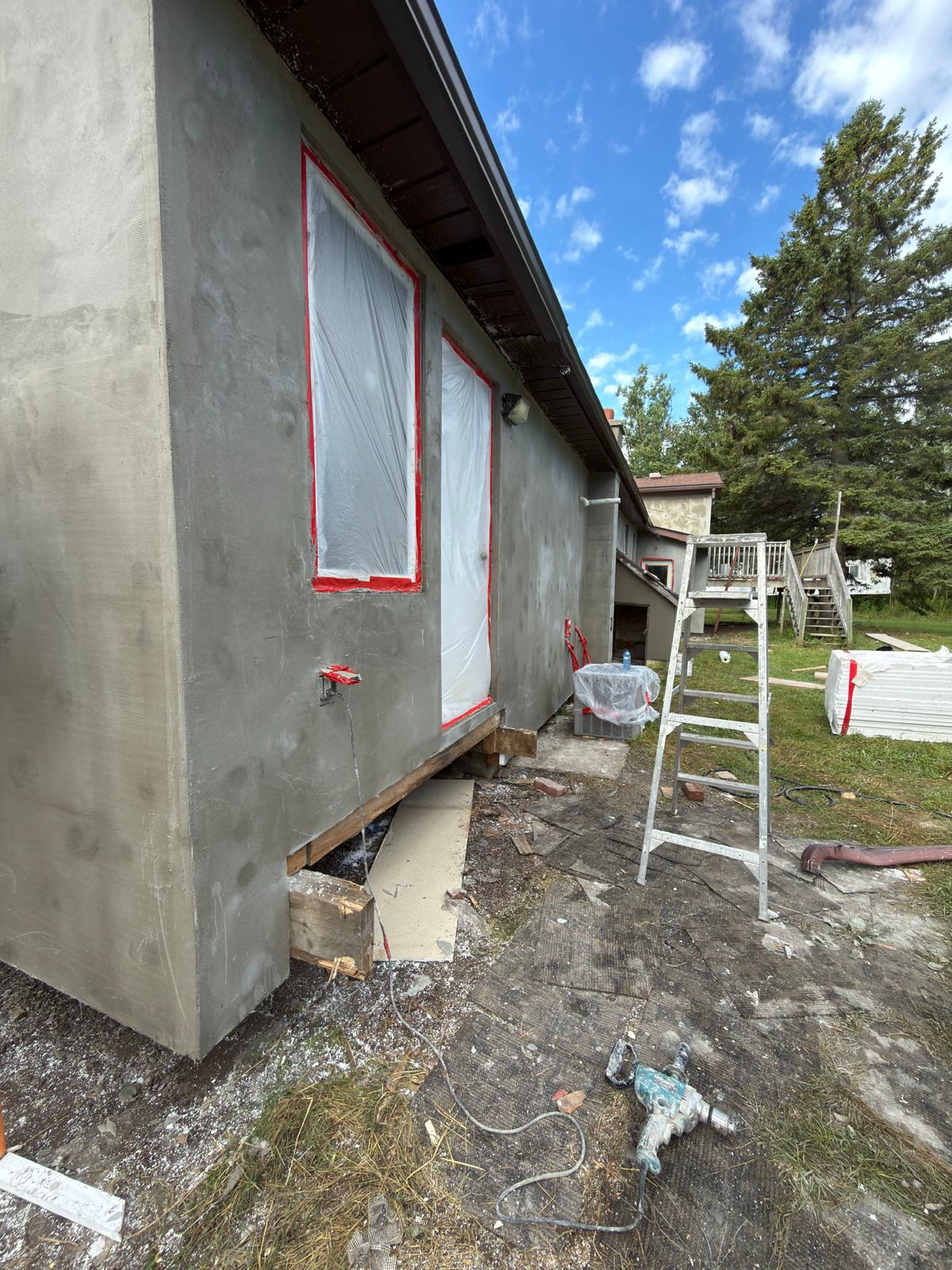
The Innisfil EIFS job shown above was scheduled for dry, mild weather for exactly these reasons: every coat, from base coat to finish, has its own temperature and drying window.
- $2M general liability · Active WSIB (Class G5) · 2-year workmanship warranty
- Durabond and Sto systems for EIFS and stucco · Sherwin-Williams, Benjamin Moore and Dulux coatings
Frequently Asked Questions
Can stucco be applied in winter in Toronto?
Not in normal winter conditions. Stucco and EIFS finishes need the air and wall surface above the product's minimum temperature, often around 4 degrees Celsius or more, and kept there while they cure. Cement-based coats must never freeze while curing. Work that cannot wait can be done inside a heated enclosure, at extra cost.
What is the minimum temperature for exterior painting?
It depends on the product and is listed on its data sheet. Many exterior paints need about 10 degrees Celsius; some low-temperature formulas are rated down to about 2 degrees. The wall surface must also be dry and free of frost and dew, and stay above the minimum while the paint cures.
Should I fix a stucco crack before winter?
If water can get into it, yes, at least temporarily. Water in a crack freezes and widens it through Toronto's freeze-thaw cycles. On a dry day above freezing, seal open cracks with a compatible exterior sealant and book the proper mesh-reinforced repair for spring.
What happens if stucco freezes before it cures?
Cement-based stucco and base coats that freeze before curing lose strength. They can crumble, crack or come away from the wall, and the coat usually has to be removed and redone.
Can EIFS be installed in winter?
Only with the wall enclosed and heated so the adhesive, base coat and finish stay above their minimum temperatures through the cure. It is done on commercial and new-build schedules that cannot wait, but it adds significant cost. Most EIFS work in Ontario is scheduled from spring to late fall.
Does FAIME do exterior stucco and painting work in the winter?
FAIME does site visits and written scopes for exterior work all winter, so it can start as soon as the weather allows, and carries on with interior painting, drywall and tile. EIFS, stucco, crack repair and exterior painting are self-performed FAIME scopes across Toronto, Vaughan and the wider GTA, with $2M general liability, Active WSIB (Class G5) and a 2-year workmanship warranty.
Want this looked at properly?
We come out, look at the actual condition, and put the scope in writing. No pricing is given before a site visit — and we will tell you if the work does not need doing.
$2M general liability · Active WSIB (Class G5) · 2-year workmanship warranty