 FAIME
Cracks and Nail Pops in Winter? Why They Appear When the Heat Comes On
Hairline cracks above doors, little round bumps on the walls and a gap opening where the ceiling meets a wall: in a Toronto house they tend to show up in November and December. Most of the time the house is not moving in a worrying way. The wood behind the drywall is drying out.
Most winter drywall cracks and nail pops come from the wood framing shrinking as heating dries the indoor air, not from a structural problem. Lumber loses moisture in winter and shrinks slightly. That pulls on the drywall at its weakest points: the corners of doors and windows, taped joints, and screws or nails that were driven into wet framing. On a top floor, a gap where the ceiling meets an interior wall is often truss uplift, where the roof trusses bow upward in cold weather and settle back in spring. These are cosmetic. Cracks that are wide, run in a stair-step pattern, keep growing all year, or come with sticking doors or sloping floors are different, and should be looked at by a structural engineer before anyone patches them.
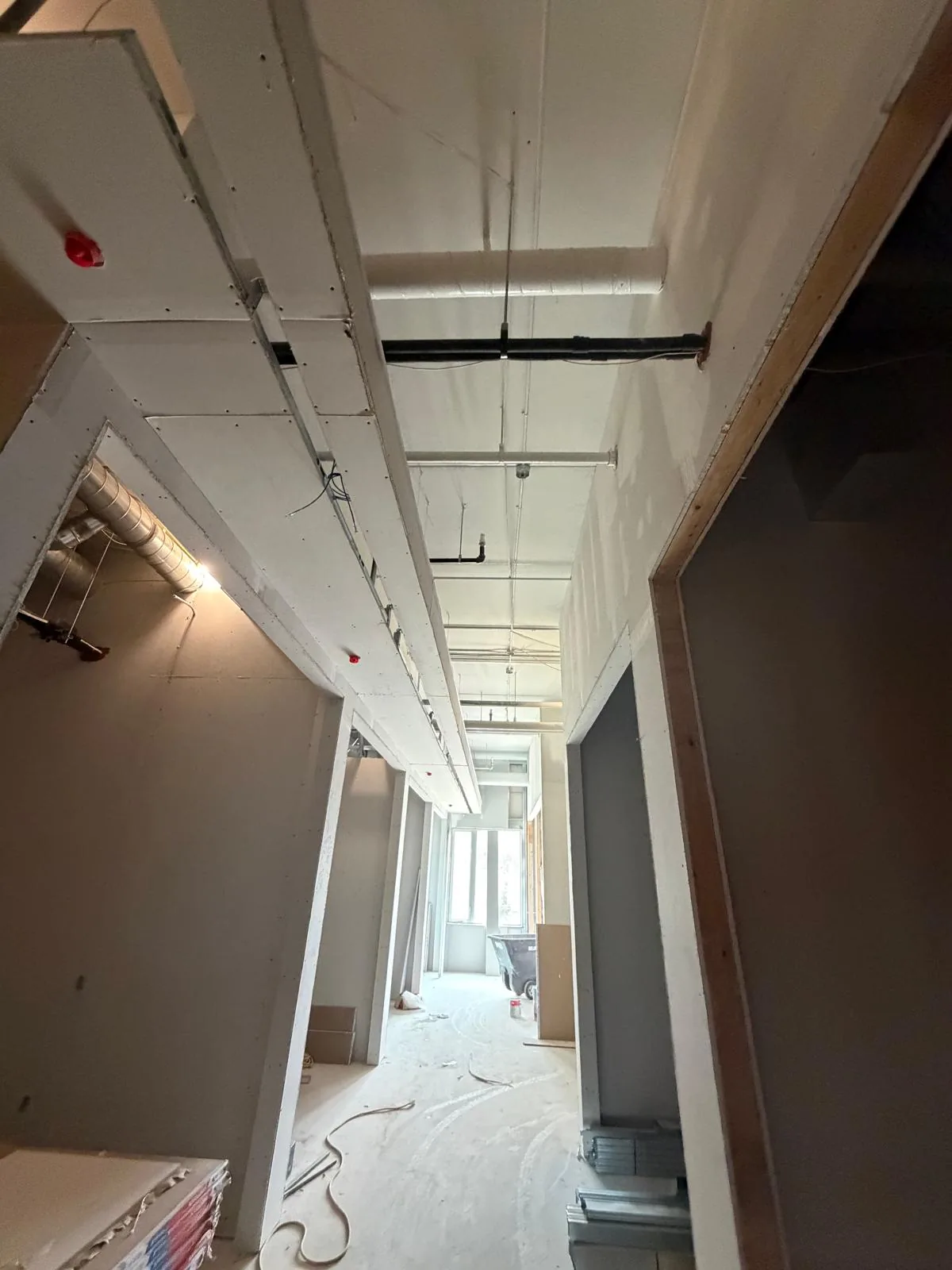
What the crack pattern tells you
Usually seasonal and cosmetic
- Hairline cracks running from the corner of a door or window at an angle, where the drywall sheet is weakest
- Nail pops: small round bumps or a ring around a fastener, in a line along a stud or joist
- A straight crack along a taped joint, often on a ceiling
- A gap where the ceiling meets an interior wall on the top floor, wider in January, smaller in summer
Have it looked at before patching
- Cracks wider than a few millimetres, or one side of the crack sitting proud of the other
- Stair-step or diagonal cracks that keep growing across the seasons
- Doors that start sticking, floors that slope, or cracks in the foundation below the same wall
- Cracks with a water stain: that is a leak first, a crack second
Put a light pencil mark at each end of the crack and write the date beside it. A seasonal crack opens over the winter and stops, or closes again in spring. A crack that keeps running past your marks through the summer is not a drying crack.
Why the heat brings them out
Outdoor air in a Toronto winter holds very little moisture, and heating it makes the air inside the house drier still. The wood studs, joists and trusses behind the drywall slowly give up moisture and shrink a little. Drywall itself barely moves, so the stress collects where the sheet is cut or joined:
- Door and window corners: the opening is a weak point in the sheet, so cracks start at the corner and run outward.
- Fasteners: when framing shrinks away from a nail or screw head, the head pushes the paper and compound out into a visible pop. It is most common in newer houses whose framing is still drying.
- Truss uplift: in a top-floor ceiling, the top of each roof truss sits in the cold attic and the bottom is buried in warm insulation. They move differently, the truss arches upward and lifts the ceiling off the interior walls. It settles back as the weather warms.
Keeping indoor humidity moderate through the winter helps, and so does avoiding big swings in it. Turn it down if your windows fog up on the coldest days, because condensation brings its own problems. We cover that in black spots in the corners of outside walls.
How to fix them so they stay fixed
Rule out the serious causes first
Wide, stair-step or growing cracks, sticking doors, or a stain beside the crack: deal with the structure or the leak before touching the drywall.
Repair in the right season
A crack filled in January can reopen as the house dries further. Late winter or spring repairs, once the framing has settled, hold best. If it has to be done now, expect a small touch-up the following year.
Re-fasten nail pops, do not just fill them
Drive a drywall screw a few centimetres from the pop to pull the board tight to the framing, set the old fastener below the surface, then fill, sand and spot-prime.
Re-tape cracked joints and corners
Filling a crack with compound alone almost always reopens. Open it slightly, embed tape, feather it out with two or three thin coats and sand flat.
Let the ceiling-wall joint move
For truss uplift, a rigid taped corner will crack every winter. The fix is to let the joint move: a flexible paintable sealant, or a trim moulding fixed to the ceiling only, so it slides as the truss rises and falls.
Prime and repaint the whole wall
Patched spots show through a touch-up, because the compound absorbs paint differently. Prime the repairs, then paint corner to corner.
Where FAIME fits
Drywall repair, taping and finishing and interior painting are self-performed FAIME scopes, for houses, condos, stores and commercial buildings across Toronto, North York, Scarborough, Etobicoke, Vaughan, Richmond Hill, Markham, Mississauga, Brampton and the wider GTA. On a site visit we read the crack pattern first, and if what we see points to structure or a leak rather than drying, we will tell you that before quoting any patching.
On larger buildings, such as the seven-storey supportive housing build in Kitchener where FAIME painted the interiors, drywall finishing and paint are sequenced so joints and fasteners are checked under raking light before the final coat.
- $2M general liability · Active WSIB (Class G5) · 2-year workmanship warranty
- Sherwin-Williams, Benjamin Moore and Dulux coatings
Frequently Asked Questions
Why do drywall cracks appear in winter?
Heating dries the indoor air, and the wood framing behind the drywall loses moisture and shrinks slightly. The stress shows up at the weakest points: the corners of doors and windows, taped joints and fasteners. Most of these cracks are cosmetic and stop growing once the house settles into the season.
What is a nail pop?
A small round bump or ring on the wall or ceiling where a nail or screw head has pushed out through the compound. It happens when the framing shrinks away from the fastener, most often in newer houses. The fix is to add a screw beside it to pull the board tight, then fill, sand and prime.
Why is there a gap where my ceiling meets the wall in winter?
On a top floor it is often truss uplift: the roof trusses arch upward in cold weather because their top sits in the cold attic and their bottom in warm insulation. The ceiling lifts off the interior walls and settles back in spring. It is not structural, and the fix is a joint that can move, not more tape.
When is a drywall crack a structural problem?
When it is wider than a few millimetres, runs in a stair-step or diagonal pattern that keeps growing across the seasons, or comes with sticking doors, sloping floors or cracks in the foundation. Have a structural engineer look at it before any patching.
Should I fix winter drywall cracks now or wait?
Cracks filled in early winter can reopen as the house keeps drying out. Repairs done in late winter or spring, once the framing has settled, last best. If they have to be done now, expect a small touch-up the following year.
Does FAIME repair drywall cracks and repaint in the GTA?
Yes. Drywall repair, taping and finishing and interior painting are self-performed FAIME scopes across Toronto, Vaughan, Richmond Hill, Markham, Mississauga, Brampton and the wider GTA. FAIME is WSIB Active under Class G5, carries $2M general liability and backs its workmanship with a 2-year warranty. Site visits are free.
Want this looked at properly?
We come out, look at the actual condition, and put the scope in writing. No pricing is given before a site visit — and we will tell you if the work does not need doing.
$2M general liability · Active WSIB (Class G5) · 2-year workmanship warranty