 FAIME
Black Spots in the Corners in Winter? It Starts With a Cold Spot
Grey or black spotting low in the corner of a bedroom, behind a dresser on an outside wall, inside a closet, or along the edge of a top-floor ceiling. It appears in winter, you wipe it off, and it comes back. That pattern almost always means warm, moist room air is meeting a surface that is colder than the rest of the wall.
Dark spots that appear in winter in the corners of outside walls are usually mould or mildew growing where indoor moisture condenses on a cold spot. Corners, the wall behind furniture, closets on outside walls and the ceiling edge under a thin patch of attic insulation stay colder than the rest of the room, so moist air condenses there first. It is not fixed by paint alone. Lower the indoor humidity, get air moving across those surfaces, and deal with the cold spot itself. Small surface patches can be cleaned. Large areas, mould that keeps coming back, or a musty smell inside the wall need a mould professional before any drywall or paint work. After that, damaged drywall is replaced, sealed and repainted with a mildew-resistant finish.
Where it shows up, and why there
- Lower corners of outside walls: two exterior walls meet, so there is more cold surface and less warm air reaching it.
- Behind beds, dressers and sofas against an outside wall: furniture blocks the warm air, so the wall behind it stays cold and damp.
- Inside closets on outside walls: doors kept shut, no heat, and clothing holding moisture.
- Along the edge of a top-floor ceiling: often a gap or thin spot in the attic insulation at the eaves.
- Around windows: the glass and frame are the coldest surfaces in the room. Water running off the glass onto the sill and wall is covered in water stains under a window.
Faint grey stripes spaced evenly across a ceiling or wall are often ghosting: dust and soot settling where the surface is colder over each joist or stud. It points to the same cold spots, but it is dirt, not mould. It washes off, and it comes back unless the air or the insulation changes.
Mould, or just dirt?
Signs it is mould or mildew
- Fuzzy or spotty texture, often in clusters
- A musty, earthy smell, stronger behind furniture
- Comes back within weeks of being wiped off
- Paint blistering, or drywall soft or stained, around it
Signs it is dust or soot
- Even, flat grey lines that follow the framing
- No smell
- Wipes off cleanly with a damp cloth
- Darker near candles, a fireplace or a supply vent
What actually fixes it
Bring the humidity down
Run bathroom and kitchen exhaust fans during and after use, avoid drying laundry indoors, and turn a humidifier down. If the windows fog on cold mornings, the air is wetter than the walls can handle.
Get warm air to the cold surfaces
Pull furniture a few centimetres off outside walls, keep closet doors on outside walls open, and do not block heating vents or radiators.
Find and fix the cold spot
A missing batt at the eaves, a gap around a window, or an uninsulated corner. That is work for an insulation contractor or an energy advisor, and it is what stops the problem returning.
Clean small patches, call in a professional for large ones
A small patch on a painted surface can be cleaned. Large areas, mould that keeps returning, or a musty smell from inside the wall need a mould professional, because the growth may be behind the drywall.
Replace damaged drywall, then seal and repaint
Board that is soft, stained through or growing mould behind the paper is cut out and replaced. Then a stain-blocking primer and a mildew-resistant paint, so the finish does not feed new growth.
Painting over mould without fixing the moisture only hides it for a season. The spots come back through the new paint, often in the same outline.
Where FAIME fits
FAIME does not do mould remediation or insulation. What we self-perform is the repair that comes after the cause is fixed: cutting out and replacing damaged drywall, taping and finishing, stain-blocking primer and repainting with a mildew-resistant finish, for houses, condos and multi-unit buildings across Toronto, North York, Scarborough, Etobicoke, Vaughan, Richmond Hill, Markham, Mississauga, Brampton and the wider GTA. On a site visit we will tell you plainly if what we see needs a mould professional or an insulation contractor first.
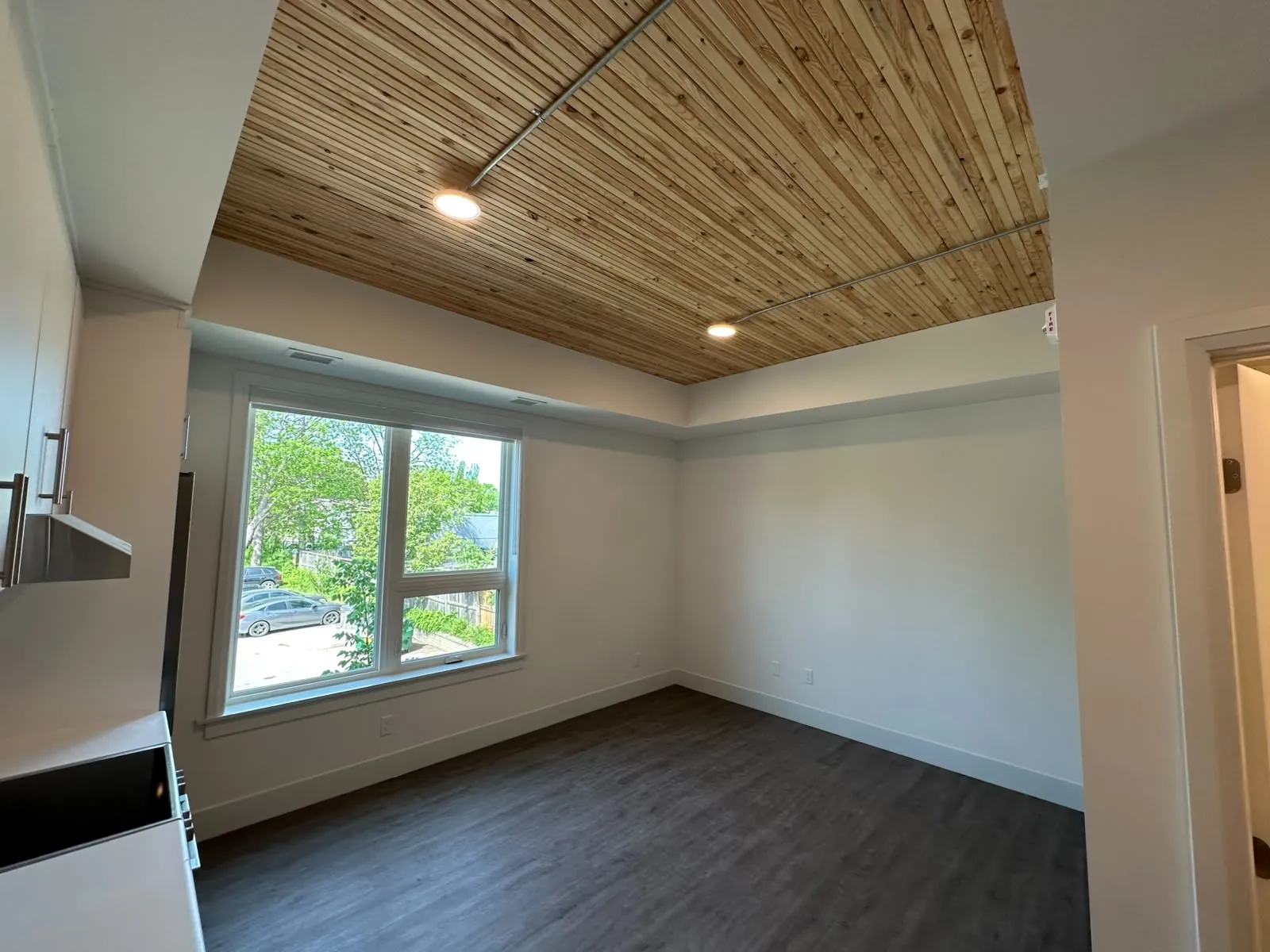
Interior painting in occupied and multi-unit buildings is a regular FAIME scope, such as the suites at the Kitchener affordable housing building shown above.
- $2M general liability · Active WSIB (Class G5) · 2-year workmanship warranty
- Sherwin-Williams, Benjamin Moore and Dulux coatings
Frequently Asked Questions
Why do black spots appear in the corners of my walls in winter?
Corners of outside walls stay colder than the rest of the room. Warm, moist indoor air condenses on those cold surfaces, and mould or mildew grows on the damp paint and drywall paper. It is a moisture and cold-spot problem, not a paint problem.
Can I just paint over mould on a wall?
No. Paint over mould without fixing the moisture only hides it for a season, and it comes back through the new finish. Lower the humidity, deal with the cold spot, have large or recurring growth assessed by a mould professional, then replace damaged drywall, prime with a stain blocker and use a mildew-resistant paint.
How do I tell mould from dirt on a wall?
Mould is usually spotty or fuzzy, smells musty and returns within weeks of cleaning. Dust and soot lines (ghosting) are flat, even, follow the framing, have no smell and wipe off cleanly with a damp cloth.
Why is there mould behind my furniture?
Furniture against an outside wall blocks warm air from reaching it, so the wall behind stays cold and damp. Moving furniture a few centimetres off the wall and lowering indoor humidity usually stops it.
When do I need a mould professional?
When the growth covers a large area, keeps returning after cleaning, there is a musty smell from inside the wall, or anyone in the home has asthma or a weakened immune system. The growth may be behind the drywall, and it should be assessed before any repair.
Does FAIME do mould removal?
No. FAIME does not do mould remediation or insulation. Once the cause is fixed, FAIME replaces damaged drywall, tapes and finishes it, and repaints with a stain-blocking primer and a mildew-resistant finish across Toronto, Vaughan, Richmond Hill, Markham, Mississauga, Brampton and the wider GTA. FAIME is WSIB Active under Class G5, carries $2M general liability and backs its workmanship with a 2-year warranty.
Want this looked at properly?
We come out, look at the actual condition, and put the scope in writing. No pricing is given before a site visit — and we will tell you if the work does not need doing.
$2M general liability · Active WSIB (Class G5) · 2-year workmanship warranty