 FAIME
Why Is My Bathroom Paint Peeling? Steam, Sheen and Prep
Bathroom paint fails faster than paint anywhere else in the house, and almost always for the same few reasons: too much moisture with nowhere to go, the wrong paint for the room, or a new coat that never bonded to the old one.
Bathroom paint peels when moisture gets behind it or when it never bonded properly in the first place. The usual causes are an exhaust fan that is missing, too weak, or not run long enough after showers; a flat or ceiling paint that is not made for a wet room; latex paint applied over old oil-based or glossy paint without sanding and a bonding primer; and paint applied over soap residue or mildew. Black or grey spots on the ceiling are usually mildew growing on that moisture. The fix is ventilation first, then proper prep: scrape, clean, sand, prime, and two coats of a bathroom-rated paint.
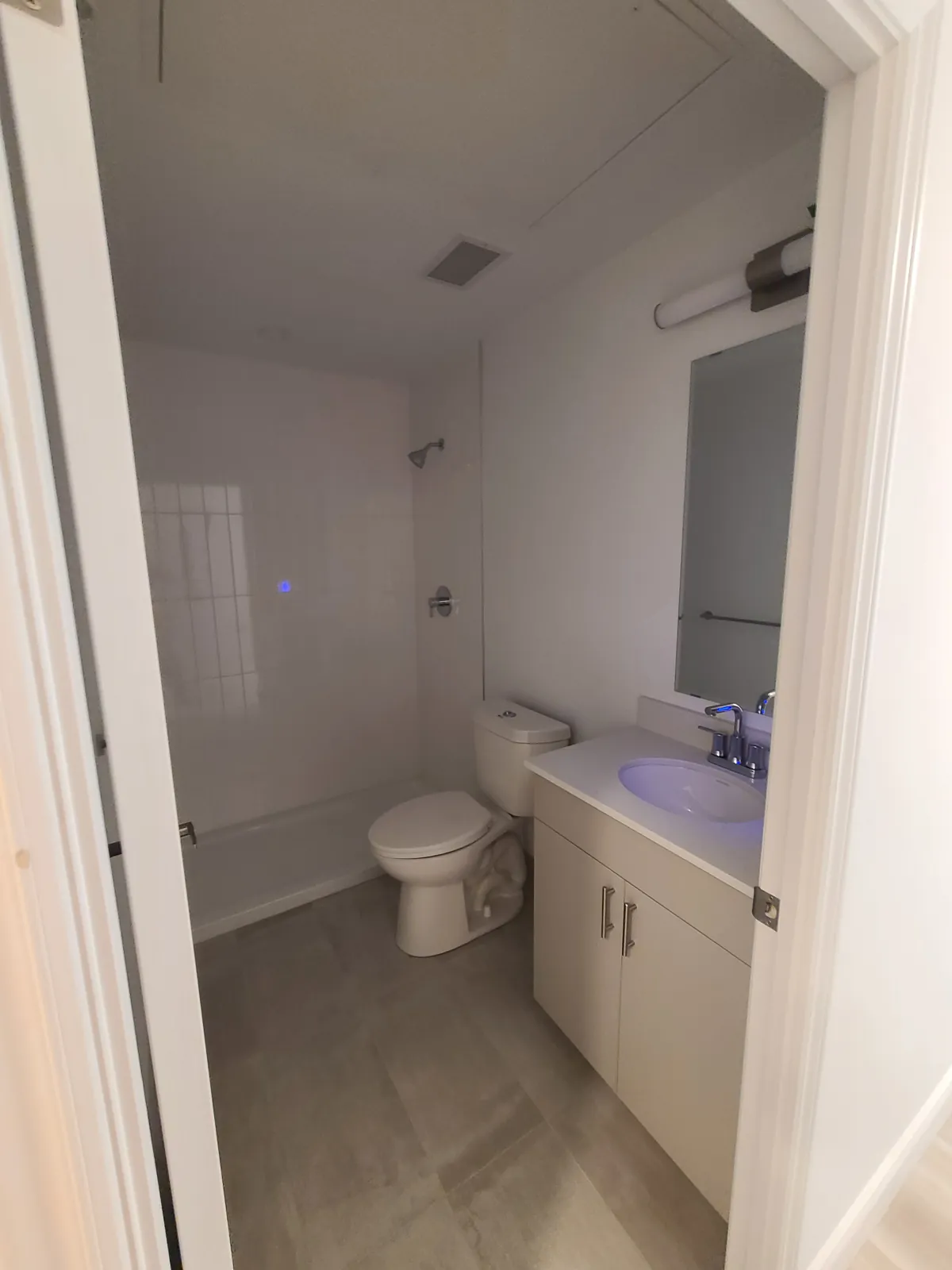
The four reasons bathroom paint peels
- Moisture with nowhere to go. A hot shower puts a lot of water into the air. Without an exhaust fan that vents outside, and runs for a good while after the shower, that water condenses on the ceiling and upper walls and works its way behind the paint. Ceilings over the shower peel first.
- The wrong paint. Flat wall paint and standard ceiling paint absorb moisture and are hard to clean. A bathroom needs a paint made for humid rooms, usually in a satin, eggshell or semi-gloss sheen, with mildew resistance built in.
- No bond to the old paint. Latex paint over old oil-based or high-gloss paint, without sanding and a bonding primer, has nothing to grip. It often peels in long sheets, and the back of the peel is smooth.
- A dirty or damp surface. Soap film, hairspray, body oils and mildew are all on bathroom walls. Paint over them and it bonds to the residue, not to the wall.
Peel off a loose piece and look underneath. Glossy older paint underneath means a bond problem: the new coat never stuck. Bare drywall paper, or a damp or crumbly surface means moisture is getting into the wall itself, and a repaint alone will not fix it.
Black spots on the ceiling: mildew or dirt?
Put a drop of diluted household bleach on a spot (ventilate the room, wear gloves). If it lightens within a minute or two, it is mildew. If it does not change, it is more likely dirt or soot.
Surface mildew
- Small spots on the paint surface, worst above the shower
- Lightens with the bleach test
- Drywall is firm underneath
- Fixed by cleaning, better ventilation, and a mildew-resistant paint
A moisture problem in the wall
- Comes back within weeks of cleaning
- Spots under the paint, bubbling, or soft drywall
- Musty smell, or staining on the ceiling below the bathroom
- Needs the wet drywall opened up and replaced, and the water source found
If the ceiling of the room below the bathroom is stained too, read what a ceiling water stain means. The tile, grout or caulking around the tub may be letting water through.
How to repaint a bathroom so it lasts
Fix the ventilation
A working exhaust fan that vents outside, sized for the room, run during the shower and for a good while after. Without this, any paint will fail again.
Scrape and clean
Remove all loose and peeling paint. Wash the walls and ceiling to remove soap film, and kill mildew with a mildew cleaner, then rinse and let dry.
Sand and repair
Feather the edges of the scraped areas, sand glossy paint to dull it, and repair any damaged drywall. In a house built before about 1990, test old paint for lead before sanding.
Prime
A bonding primer over glossy or oil-based paint; a stain-blocking primer over water stains or mildew shadows.
Two coats of bathroom-rated paint
A mildew-resistant paint in satin, eggshell or semi-gloss. Then new caulking where the tub, shower or vanity meets the wall.
Where FAIME fits
Interior painting and drywall repair are self-performed FAIME scopes in houses, condos, rental suites and commercial washrooms across Toronto, North York, Scarborough, Etobicoke, Vaughan, Richmond Hill, Markham, Mississauga, Brampton and the wider GTA. We painted 110 rental units at Oakley Ridge in Guelph and the suites, corridors and amenity rooms at Queensland Condos in Stratford, so wet rooms are routine work for our crews.
If the tile around your tub is cracked or loose, that is often where the water is coming from. See why tiles crack or come loose.
- $2M general liability · Active WSIB (Class G5) · 2-year workmanship warranty
- Sherwin-Williams, Benjamin Moore and Dulux coatings
Frequently Asked Questions
Why is the paint peeling off my bathroom ceiling?
Usually because moisture from showers condenses on the ceiling and gets behind the paint. A missing, undersized or unused exhaust fan is the most common cause, often combined with a flat ceiling paint that is not made for a humid room.
What paint should be used in a bathroom?
A paint made for humid rooms, with mildew resistance, in a satin, eggshell or semi-gloss sheen. Those finishes shed moisture and can be wiped clean. Flat wall paint and standard ceiling paint absorb moisture and hold mildew.
Can I paint over peeling paint in the bathroom?
No. Paint over peeling paint peels with it. All loose paint has to be scraped off, the edges sanded smooth, the surface cleaned and primed, and only then repainted.
Are black spots on my bathroom ceiling mould?
Usually they are mildew on the paint surface, which lightens within a minute or two under a drop of diluted bleach. If the spots come back quickly, sit under the paint, or the drywall is soft or smells musty, moisture is getting into the wall itself and that section should be opened up and replaced.
How long should a bathroom fan run after a shower?
Run it for the whole shower and for a good while after, until the mirror and walls have cleared. A timer switch makes that automatic. The fan must vent outside, not into the attic.
Does FAIME repaint bathrooms in the GTA?
Yes. Interior painting and drywall repair are self-performed FAIME scopes in houses, condos, rental suites and commercial washrooms across Toronto, Vaughan, Richmond Hill, Markham, Mississauga, Brampton and the wider GTA. FAIME is WSIB Active under Class G5, carries $2M general liability and backs its workmanship with a 2-year warranty. Site visits are free.
Want this looked at properly?
We come out, look at the actual condition, and put the scope in writing. No pricing is given before a site visit — and we will tell you if the work does not need doing.
$2M general liability · Active WSIB (Class G5) · 2-year workmanship warranty