
One Building, Every Painted
Surface Inside It
FAIME Construction Inc. did subcontracting to Colour of Painting on Phase 1 of Friendship Village, a seven-storey, 92,410 sq ft supportive housing building in downtown Kitchener, Ontario. FAIME painted 100 residential units, the corridors serving them, stairwells and stair railings, amenity and common rooms, door frames throughout, walls and ceilings, and the parking garage — including identification coating to fire-protection and sprinkler piping. Phase 1 opens to residents later in 2026.Institutional & multi-residential interior painting · GTA, Kitchener–Waterloo & Simcoe · 15+ years' trade experience · WSIB Active · $2M CGL · 2-year workmanship warranty
Project Overview
Friendship Village is a two-phase supportive and affordable housing development on Charles Street in downtown Kitchener, designed by Martin Simmons Sweers Architects. Older structures on the site were replaced with a single purpose-built community hub. The first phase involves the construction of 100 supportive housing units, while the second phase will add 70 affordable housing apartments, creating a total of 170 new homes. Set alongside the housing are onsite healthcare and support rooms, recreational and communal meeting space, a dedicated outdoor courtyard, and House of Friendship's own administrative offices, so residents can stay put as their needs change rather than move on. FAIME Construction Inc. did subcontracting to Colour of Painting on this project, carrying interior painting scope from the parking level to the top floor.
What This Job Actually Demanded
The technical scope was not the hard part. A hundred units, corridors, stairwells and railings, amenity and common rooms, door frames, walls and ceilings and a parking level is volume, not complexity. The hard part was the sequence.
On a build this size the trades run like a chain. Multiple crews work in a set order, and one mistake anywhere in that order lands on everyone behind it — a delivery slips, a floor is not ready when your crew is standing in it, and the whole schedule behind you moves with it. Finishing trades feel that worst, because we are at the end of the chain. Everything upstream arrives at our door.
The second thing is damage after the fact. Somebody catches a wall with a tool, and the instinct is to cover it over rather than flag it. You cannot cover it from a painter — it shows the moment the coating goes on, and by then it costs several times what it should have: stop, fix, sand, spot-prime, repaint the section, come back again for touch-ups. Our ask on any site is simple. Tape it and tell us. We will make it good before the paint goes on, at a fraction of the disruption.
The same applies after the walls are coated. Fresh paint gets touched, and finished areas get knocked while other trades are still working around them. The finish only counts on the day the building is handed over, so we went back through and closed the touch-ups out properly rather than calling it done at the last roller stroke. That is what finishing clean on a live schedule actually costs.
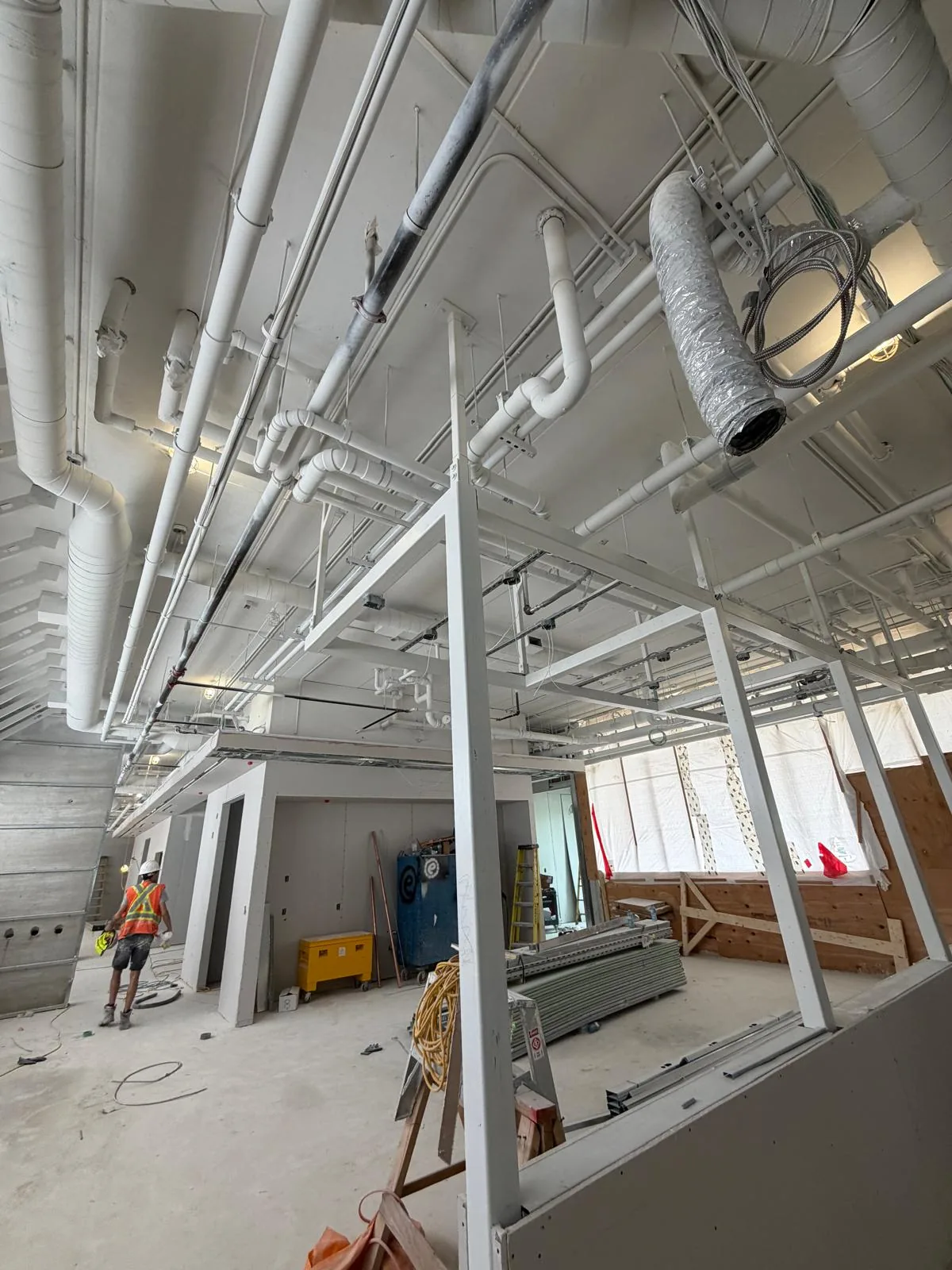
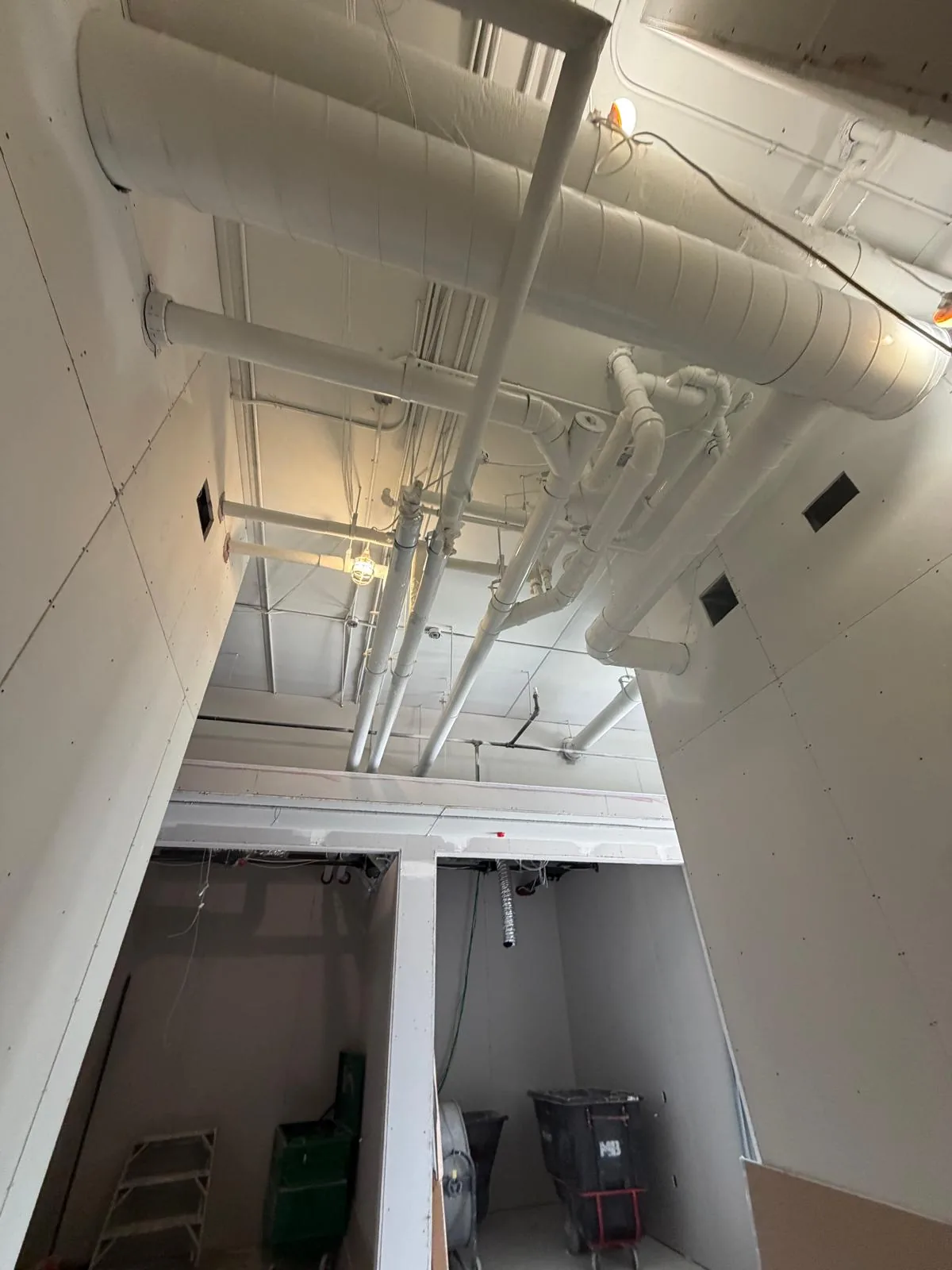
The identification coating to the fire-protection and sprinkler piping is a different kind of scope — the piping was installed by the mechanical trades and FAIME applied the coating only. It is not decorative. A clean, uniform coated surface is what makes that system readable during a routine safety audit: rust spots, damage and cracked welds stand out immediately against it, instead of disappearing into bare or inconsistent pipework.
Working Inside an Active Multi-Trade Site
On a build this size, painting is not a job that happens in an empty building. Drywall, mechanical, electrical, sprinkler, flooring and door crews are all working the same floors on a set release sequence. FAIME's crews worked to that sequence — taking floors and areas as they were released, protecting finished work behind them, and handing areas back clean so the next trade was not held up. Owning your slice of the sequence without becoming the reason someone else is waiting is most of what a general contractor is actually buying.
The Units — 100 Suites to One Standard
Each residential unit received its full interior paint scope: walls, ceilings, and door frames. Across 100 suites the challenge is not any single room, it is repeatability — the same product, the same number of coats, the same cut lines and the same colour, suite after suite, so that the last one matches the first. That consistency is a function of a written colour schedule, controlled batching, and crews who are not improvising room to room.
Corridors, Stairs & Railings
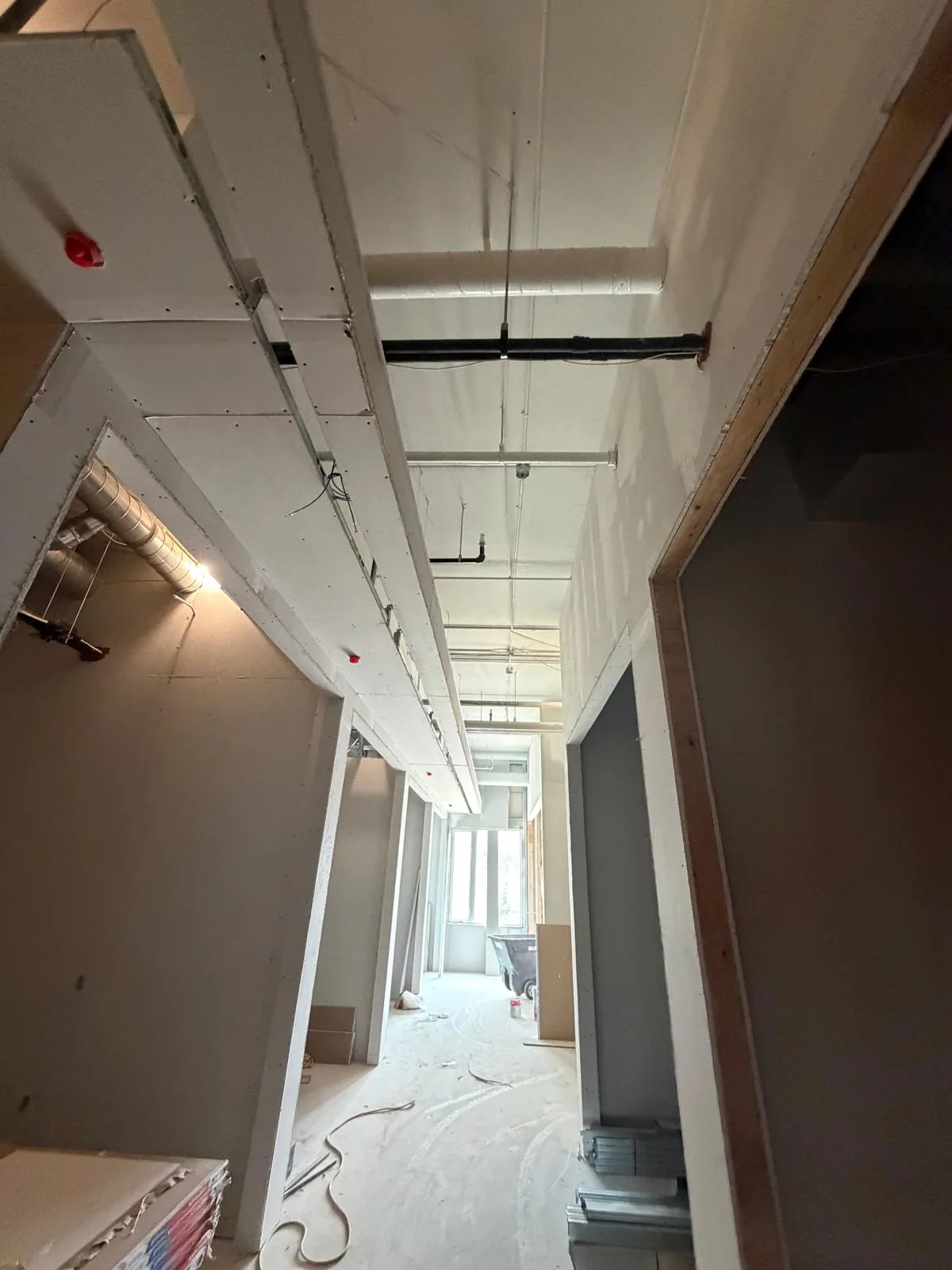
Circulation areas take more abuse than any other surface in a residential building and they are the first thing anyone sees. FAIME painted the corridors on every residential floor, the stairwells connecting them, and the stair railings throughout. Railings and steel are their own discipline — preparation, adhesion and coverage on a handled metal surface behave nothing like drywall, and a railing that was rushed shows it within a season.
Doors, Frames & Trim
Door frames run through every corridor, every unit and every common space in the building, and they are the detail an inspector's eye lands on. FAIME painted the frames throughout the building alongside the wall and ceiling scope, so that the transitions between frame, wall and ceiling were cut by the same crews working to the same standard rather than being stitched together from separate scopes.
Amenity & Common Spaces
Phase 1 includes communal meeting areas, recreational space, healthcare and support rooms and administrative offices. These rooms carry a different specification from the suites — different colours, different sheens, and finishes chosen for spaces that will see heavy daily use by residents and staff. FAIME painted the amenity and common areas to the project's schedule of finishes.
Parking Garage, Fire & Sprinkler Piping
Below grade, FAIME carried out the parking garage painting scope, and applied identification coating to the fire-protection and sprinkler piping running through the building. To be precise about scope: the piping itself was installed by the mechanical and sprinkler trades — FAIME's work was the coating on it. Painting exposed services is a specific skill: the substrate is metal, the surfaces are overhead and awkward, overspray control matters because everything around it is finished, and the colour is not decorative — it is how the system is identified for the life of the building.
Ceilings
Ceilings across the units, corridors and common areas were painted as part of the same scope. Ceilings are unforgiving — they are lit from below at a grazing angle, which shows every roller lap and every missed cut. FAIME has carried out full commercial ceiling repaint programmes before, including a scissor-lift spray-and-back-roll ceiling job in Scarborough, and brought the same approach here.