One Tall Ceiling,
One Even Coat, No Shortcuts
Project Overview
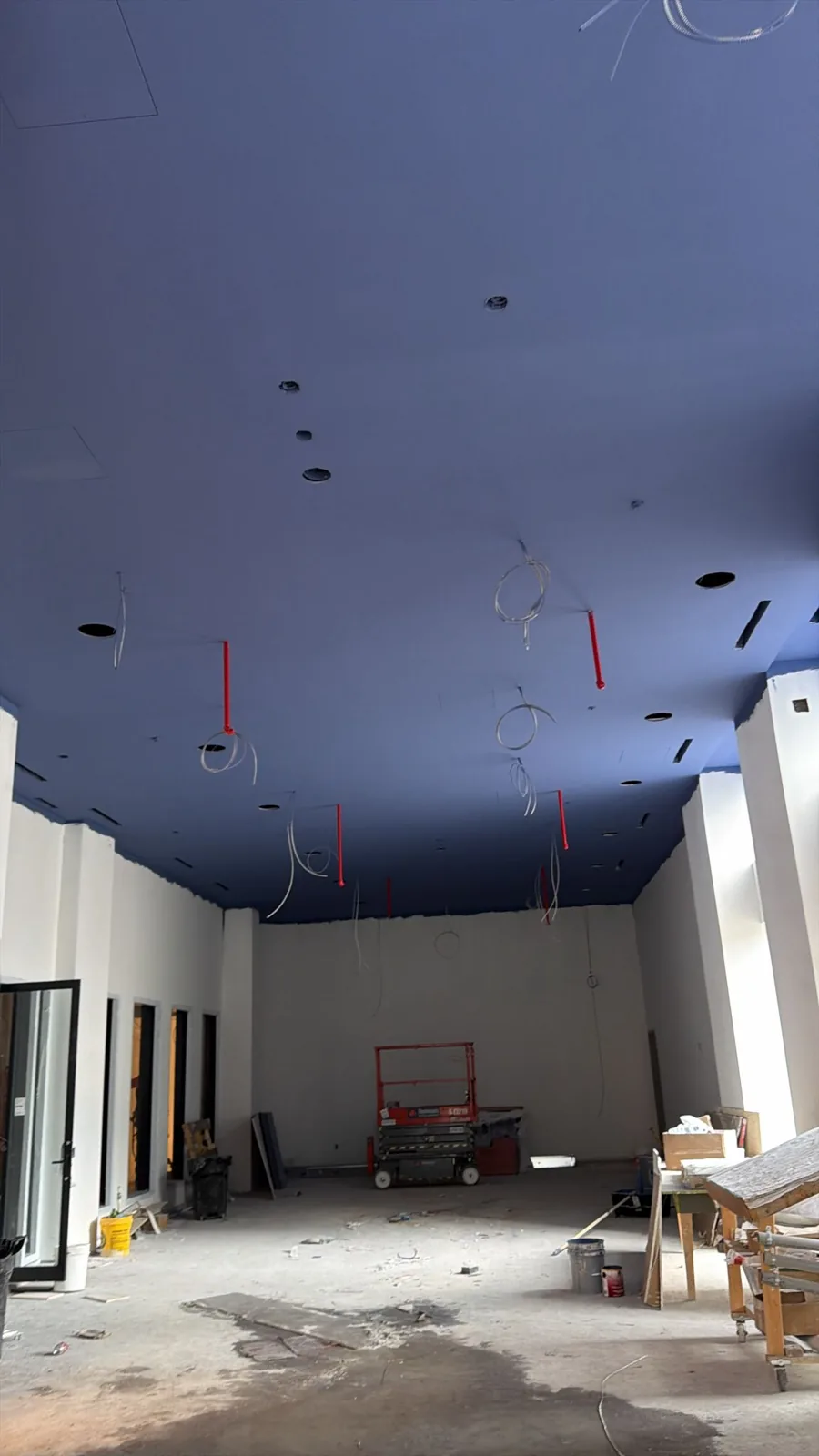
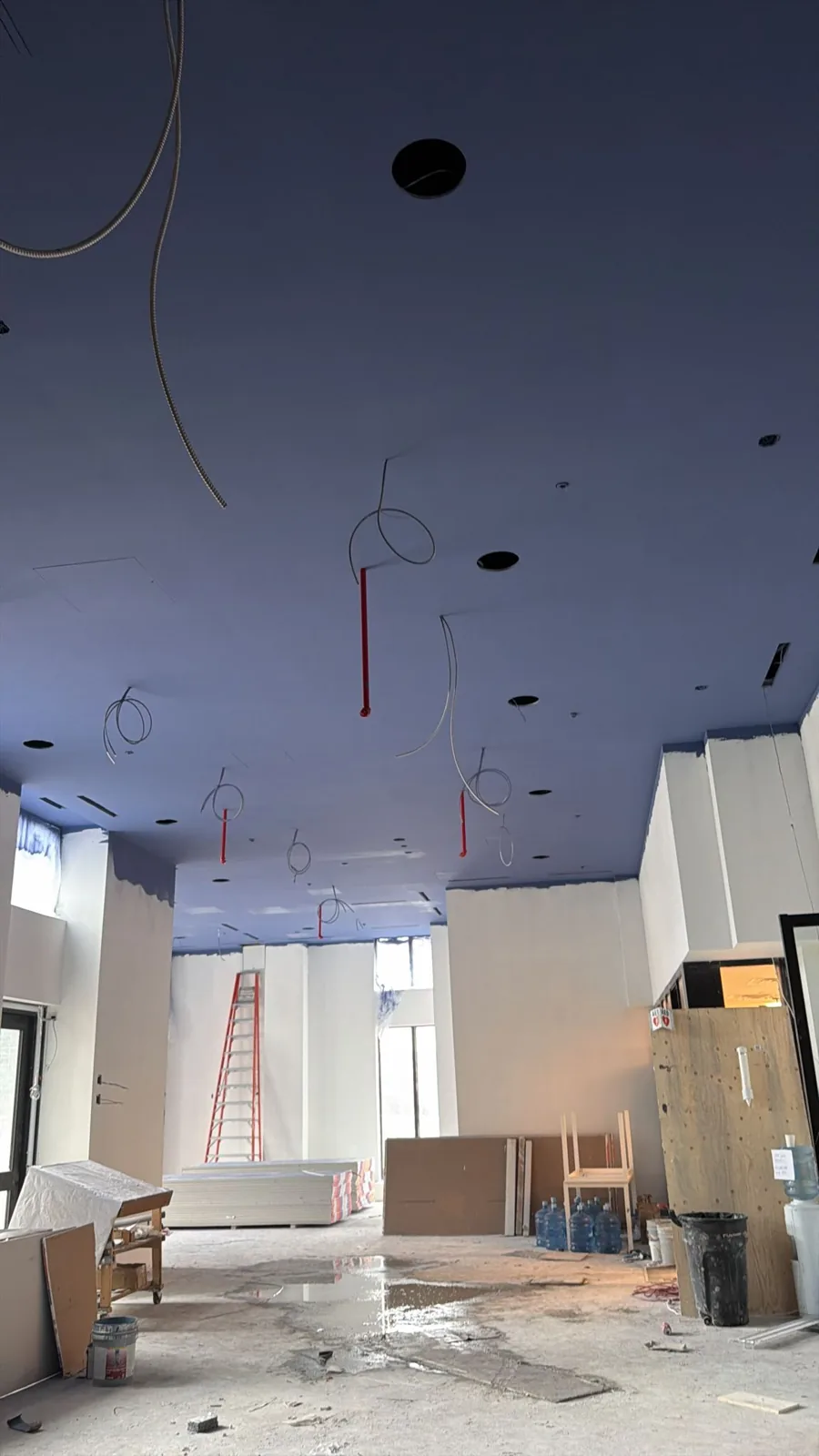
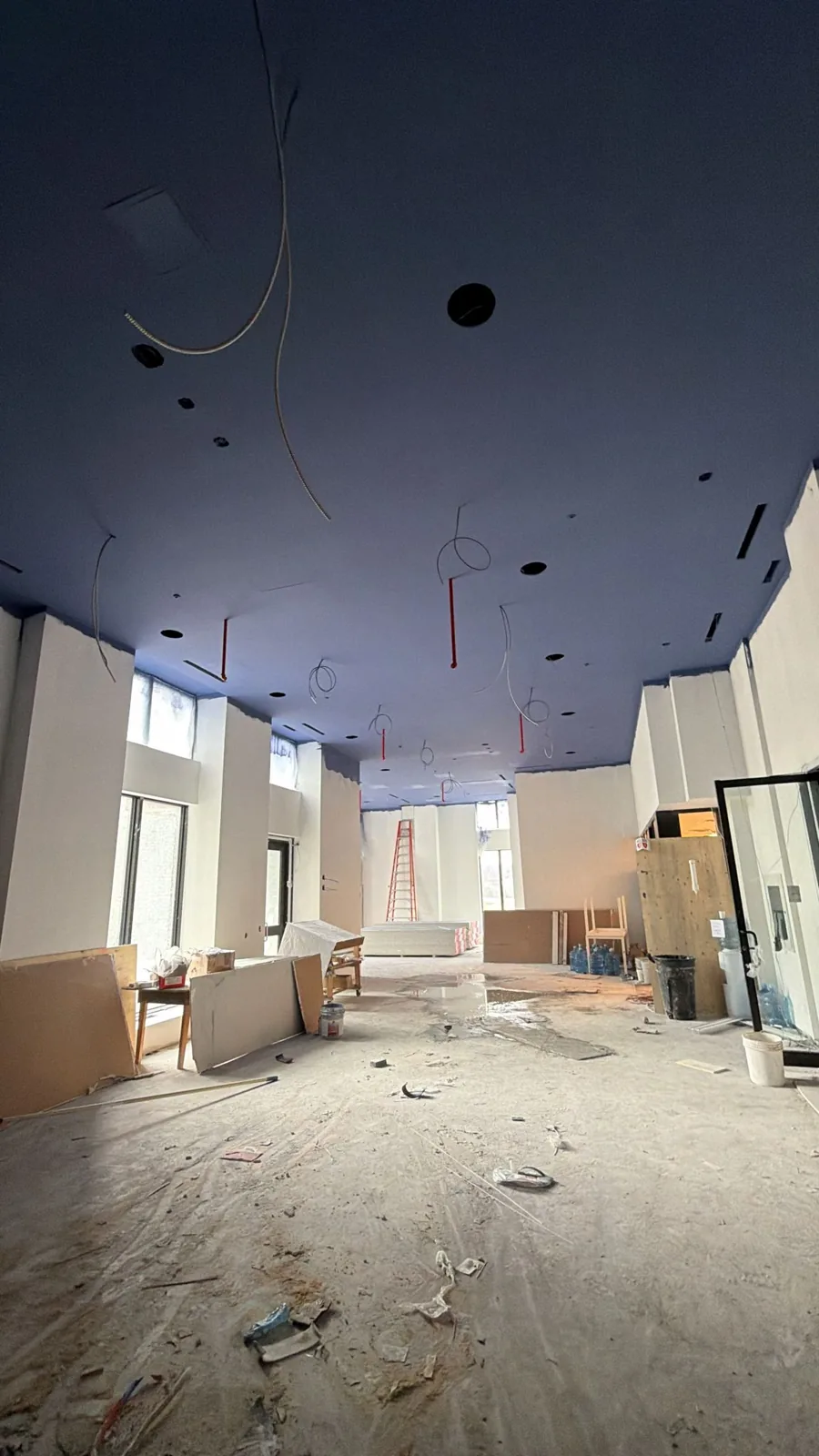
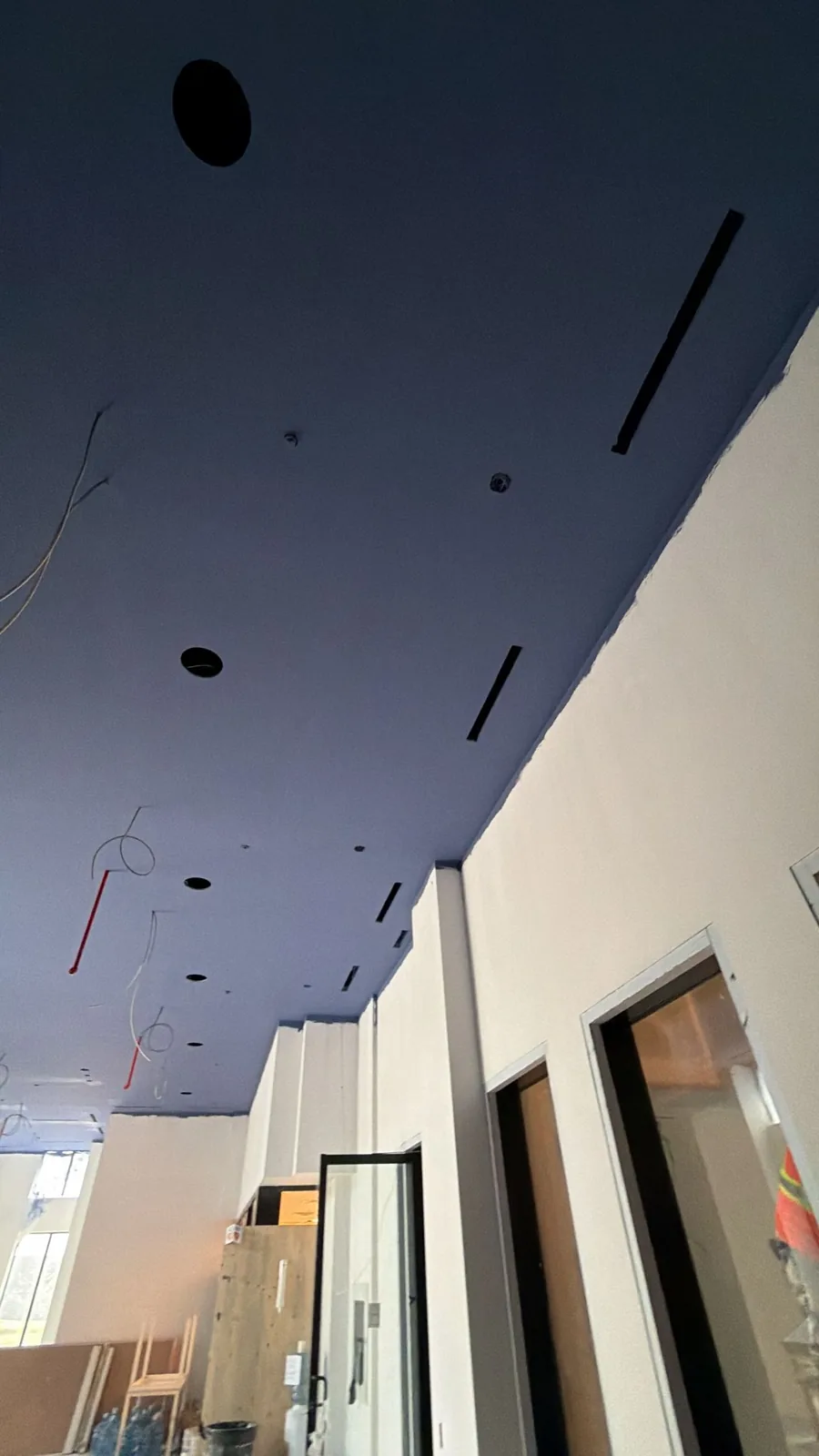
A commercial ceiling repaint inside a single Scarborough storefront unit — a compact but tall, open space mid-build-out. The brief was a deep navy ceiling sprayed across the full open deck — high above the floor, around recessed openings, exposed conduit, and sprinkler drops — finished evenly enough to read as one continuous plane from any angle on the floor. Access, protection, and a consistent two-coat film were the whole game. Every stage is documented below with photos from this exact job.
What We Were Working With
There was no failure to diagnose on this one, and that is the honest version. This was a new office opening. Nothing had been on the ceiling before — no previous coating to strip, no stains to block, no failed paint to grind back. The scope was cosmetic, and the building was not yet in use, so there was no phasing around occupants and no after-hours restriction.
That turns it from a repair problem into an execution problem. On a high open ceiling in an empty space, the only thing separating a good result from an average one is how the coating goes on.
Which is why it was sprayed and back-rolled rather than sprayed alone. Spraying lays the paint on the surface; back-rolling behind the spray works it in and moves it around evenly, so the film is consistent across the whole ceiling instead of thin in some places and heavy in others. You get a better-looking finish on the day and a coating that keeps looking right for longer. Across a ceiling this size, that is the whole difference.
Stage 1 — Protection & Masking
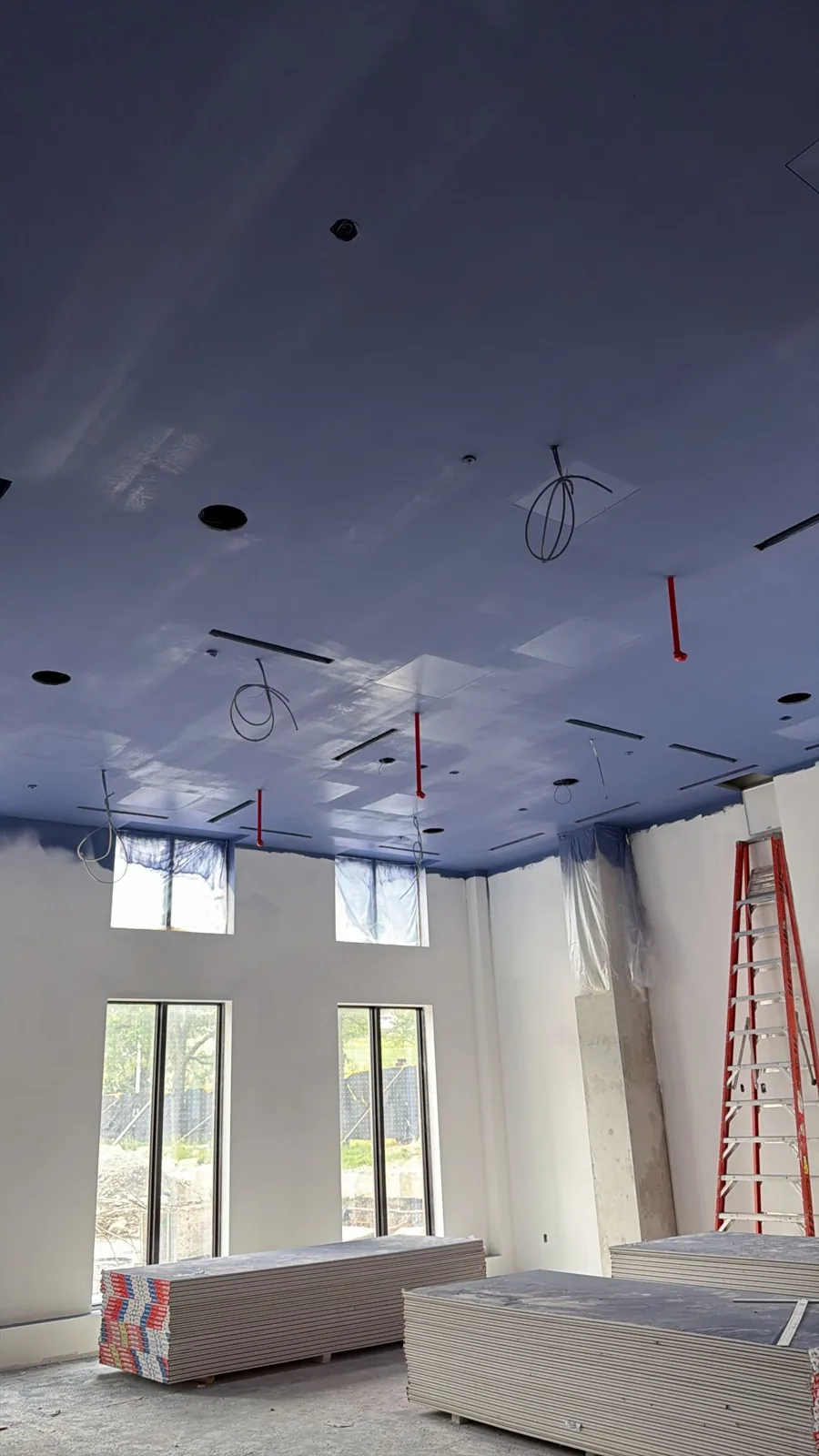
Before a drop of paint came out, the walls, window openings, floors, and everything staying its original colour were masked and covered. On a deep colour sprayed overhead, overspray drifts — so the cut lines where the navy ceiling meets the white walls had to be set first. This is the stage nobody sees, and the reason the finished edges are crisp instead of fogged.
Stage 2 — Scissor-Lift Access & Cut-In
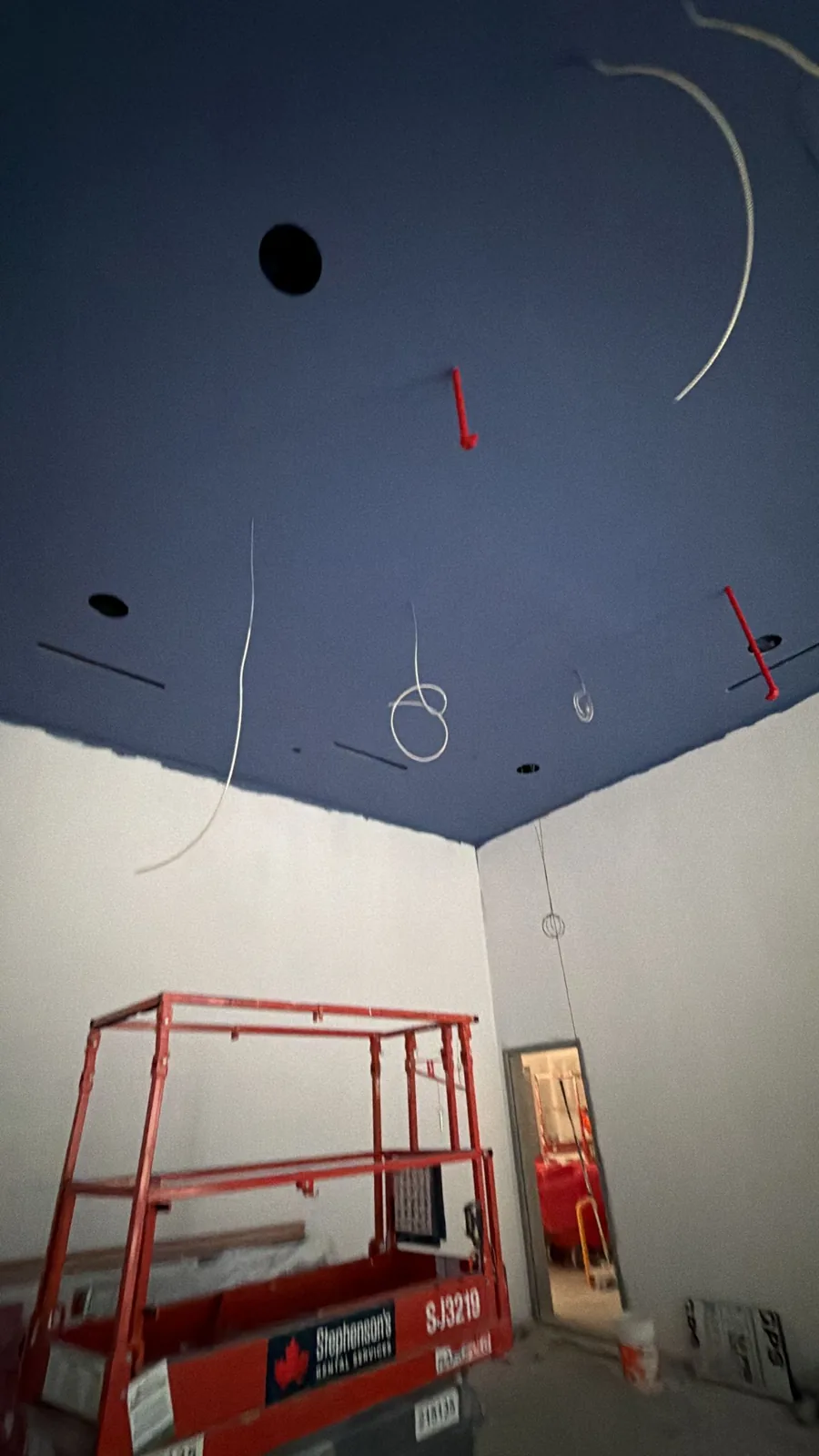
The ceiling height put the work well out of ladder range, so a scissor lift carried the crew across the floor plan to reach every section safely and consistently. Perimeters, corners, and the tight spots around recessed cans and conduit were cut in by hand first, so the spray pass that followed could stay fast and uniform without fighting the edges.
Stage 3 — Airless Spray + Back-Roll, Coat 1
The first coat went on by airless sprayer for speed and an even spread across the open deck, then was immediately back-rolled. The back-roll is what works the paint into the surface and kills the spray-only halo — it builds a proper film and a consistent sheen instead of a thin, blotchy fog. That combination is the difference between a ceiling that looks sprayed and one that looks finished.
Stage 4 — Second Coat & Close-Out
A full second coat brought the deep navy to even, uniform coverage with no thin spots or roller tracking visible from the floor. Checked under work light from multiple angles, masking pulled, and the space left clean for the next trade. Two coats, one consistent colour, edge to edge.